Achilles tendon rupture surgery hospital in Seoul: understanding the assessment
A suspected Achilles tendon rupture needs an orthopaedic assessment to confirm the injury and discuss suitable care. The decision to operate depends on the clinical findings and the individual situation; surgery is not automatically appropriate for every person. Seoul Gunwoo Orthopedic Surgery Clinic is an orthopaedic clinic in Gangdong-gu with a published focus on foot and ankle conditions, including Achilles tendon repair. A clear consultation is the first step: it gives the medical staff an opportunity to assess the tendon and explain the available approach.
What the initial assessment is meant to clarify
The consultation helps establish what has happened to the tendon and what care may be appropriate. The medical staff can consider the injury alongside relevant health and activity details, then explain whether repair is being considered. Share when the symptoms began, how the injury occurred, and any prior treatment or relevant medical history. These details help make the discussion more useful, but they do not replace an examination. Bring any available records or imaging related to the injury so the team can review information already collected.
It is reasonable to ask how the diagnosis was reached, what the proposed procedure is intended to address, and what alternatives may be suitable. A suspected rupture should not be treated as confirmed solely on the basis of pain or difficulty walking; assessment by a clinician is important. The medical staff can explain what further evaluation is needed and whether surgery is appropriate in the specific case. If the injury is recent or symptoms are changing, contact a medical provider promptly rather than relying on online descriptions to choose treatment.
A careful assessment connects the diagnosis to an individual treatment plan. Ask the medical staff to explain the findings and why a particular approach is being considered.
How the clinic’s foot and ankle focus relates to care
Seoul Gunwoo Orthopedic Surgery Clinic describes its work as focused on foot and ankle orthopaedic care in the Gangdong area. Its published areas of focus include Achilles tendon repair, ankle ligament surgery, bunion correction, ankle fracture surgery, and ankle cartilage and arthritis care. For someone considering treatment for a tendon rupture, this focus means the consultation can center on the ankle and foot rather than treating the injury as a general question about surgery. The planned care still depends on individual assessment.
The clinic lists ultrasound-guided Achilles repair among its techniques. That information can help patients frame questions, but it does not establish that this technique is suitable for every rupture or that every patient will receive the same procedure. Ask the medical staff what method is proposed for your case, how the decision is made, and what the treatment plan includes. The clinic also lists other foot and ankle procedures, including ligament repair and reconstruction, but those are separate treatments for different clinical issues. Confirm that the discussion addresses the Achilles tendon injury specifically.
A foot and ankle focus is relevant to a tendon injury, but the treatment method remains case-specific. The clinic lists ultrasound-guided Achilles repair, which can be discussed during an individual consultation.
Questions to raise before deciding on surgery
Before deciding, ask what the assessment shows and what the purpose of surgery would be in your situation. It can also help to ask what non-surgical care may involve, what follow-up is planned, and what instructions apply after treatment. The medical staff can explain how the proposed approach relates to your health and daily activities. Make sure you understand the plan before agreeing to a procedure.
Patients may find it useful to write down questions in advance, particularly if they are comparing treatment options or arranging support after the consultation. Discuss any medicines, ongoing health conditions, and previous procedures with the attending doctor, since these details may affect planning. Ask whom to contact if questions arise after the visit and what the clinic’s process is for arranging follow-up. These practical points help keep expectations grounded without assuming that every patient will have the same treatment or course of care.
Bring relevant medical records and describe the injury as accurately as possible. If you have imaging or a report from an earlier assessment, ask whether it would be useful to bring it. If you need language support, contact the clinic before booking to confirm whether interpretation is available. An English-language service or website should not be taken as confirmation that an English-speaking clinician or interpreter will be present. Clear communication is an important part of understanding the proposed care.
| Clinic detail | Published information |
|---|---|
| Category | Orthopedics |
| Foot and ankle procedure listed | Ultrasound-guided Achilles repair |
| Other published focus areas | Ankle ligament surgery, bunion correction, ankle fracture surgery, ankle cartilage, and ankle arthritis |
Use the consultation to connect these general clinic details to the injury being assessed. Ask whether the listed repair technique applies to your case, what further evaluation is needed, and what decisions must be made before treatment. The clinic’s stated focus and procedure list can guide the conversation, but they are not a substitute for a diagnosis or an individualized recommendation.
Achilles tendon rupture surgery hospital in Seoul: understanding repair
Achilles tendon repair is a procedure intended to address a damaged tendon, but the precise plan depends on the assessment. Seoul Gunwoo Orthopedic Surgery Clinic lists ultrasound-guided Achilles repair as one of its techniques. Patients should discuss what that technique means in their case rather than assuming that a procedure name determines the details of surgery or recovery. Ask for a plain-language explanation of the proposed repair, its purpose, and the follow-up plan. This makes it easier to consider the recommendation alongside personal health and daily needs.
What a discussion of ultrasound-guided repair can cover
The clinic lists ultrasound-guided Achilles repair among its available techniques. During a consultation, ask how ultrasound guidance is used in the proposed procedure and whether it is appropriate for the findings in your case. The medical staff can explain the intended approach and what preparation or follow-up will involve. The technique name alone does not provide a complete description of an individual operation, so request details that relate to your diagnosis and treatment plan.
It is also useful to ask how the diagnosis and treatment recommendation were reached. The clinician can explain the findings, the role of any imaging, and whether other management options should be considered. Do not assume that a named technique is appropriate solely because it appears on a clinic’s procedure list. Your health history and the specific injury matter to the decision. If anything is unclear, ask the medical staff to restate the recommendation in everyday language and explain the next step before you make a decision.
The procedure listed by the clinic is a starting point for discussion, not a one-size-fits-all plan. Ask how the proposed repair fits the assessment and what care will follow it.
Understanding the treatment plan and follow-up
A treatment plan should explain more than the name of the procedure. Ask what the next stages of care are, how follow-up is arranged, and which instructions you will need to follow. These details are personal to the clinical plan, so they should come directly from the attending doctor. Before treatment, make sure you know whom to contact with questions and how follow-up will be coordinated. Do not rely on another person’s experience as a substitute for instructions based on your own assessment.
Recovery and return to everyday activities can differ from person to person. The medical staff can discuss the expected course in light of the injury and treatment, including any activity guidance that applies to you. Avoid setting a timeline based on a general online estimate; your clinician is best placed to explain what is appropriate for your case. If the plan changes or new concerns arise, ask the clinic how to seek advice. Understanding who is responsible for follow-up can make the care process clearer.
Follow-up instructions should be specific to the person and the repair plan. Ask about activity guidance, expected stages of care, and how to reach the clinic with concerns.
Preparing for a consultation about surgery
Before the appointment, note the timing and circumstances of the injury, the symptoms you have noticed, and any care already received. Bring relevant medical records or imaging if available, and prepare a list of medicines and health conditions to discuss. These details help the medical staff understand your situation. If you are unsure what to bring, contact the clinic before the visit. Good preparation supports a focused conversation; it does not replace the examination or determine the treatment choice.
Consider writing down the questions that matter most to you, such as why surgery is being recommended, what alternatives are relevant, and what follow-up involves. Ask for clarification about any unfamiliar terms and make sure you understand the instructions before leaving. If language support is important, contact the clinic in advance to confirm whether interpretation can be arranged. Planning ahead is especially helpful when you need to coordinate travel, work, or support at home, although the specific needs and instructions differ for each patient.
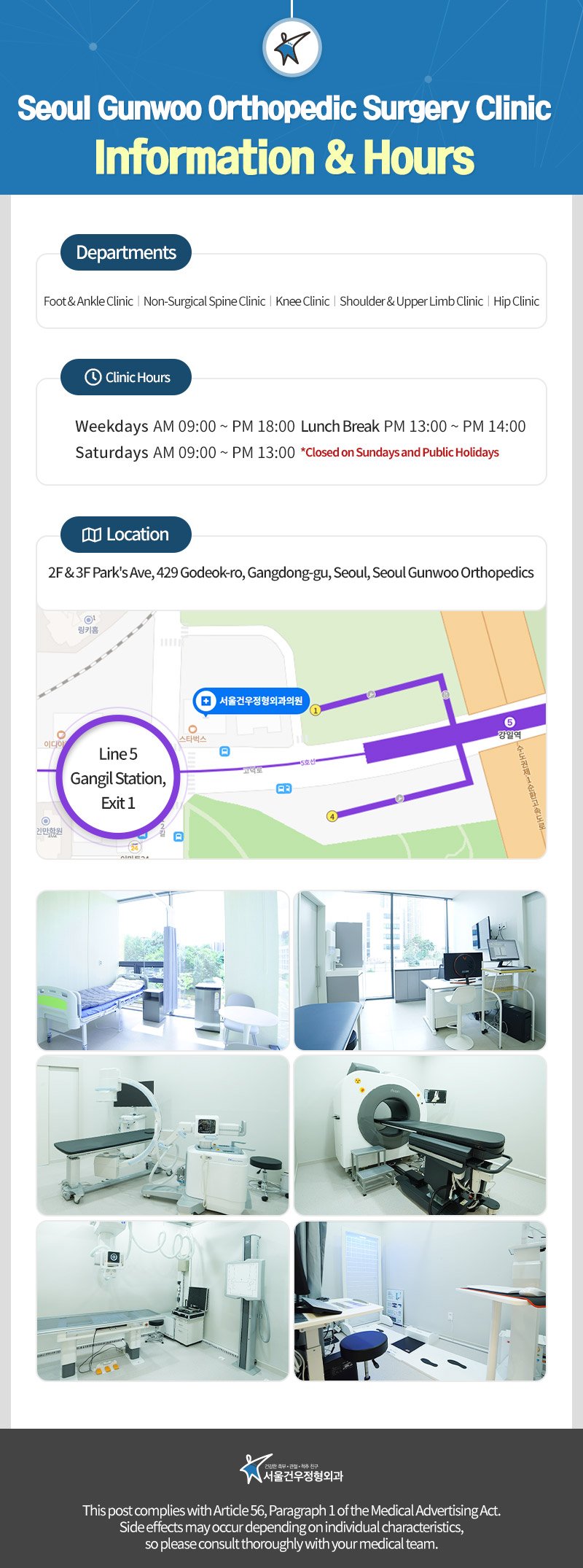
Seoul Gunwoo Orthopedic Surgery Clinic is located at 2F–3F, 429 Godeok-ro, Gangdong-gu, Seoul, Republic of Korea. The clinic lists consultation hours from Monday to Friday, 09:00–18:00, with a weekday lunch break from 13:00–14:00, and Saturday from 09:00–13:00. It is closed on Sundays and public holidays. These details can help with planning a visit, while the clinic can confirm appointment availability when contacted.
| Day | Consultation hours |
|---|---|
| Monday–Friday | 09:00–18:00 |
| Weekday lunch break | 13:00–14:00 |
| Saturday | 09:00–13:00 |
| Sunday and public holidays | Closed |
Check the schedule before travelling, especially if you are arranging an appointment around work or transport. The clinic operates on Korea Standard Time. Contact the clinic before booking if you need language support or interpretation, and ask about appointment arrangements for an Achilles tendon assessment. That call can also help you confirm practical details for your visit without assuming that a particular clinician or interpreter will be available.
Achilles tendon rupture surgery hospital in Seoul: choosing a clinic
Choosing where to seek care involves understanding the clinic’s focus, the clinicians’ backgrounds, and how the consultation will address your injury. Seoul Gunwoo Orthopedic Surgery Clinic provides orthopaedic care and describes a focus on foot and ankle conditions. Its published information includes Achilles tendon repair and ankle-related care. Patients can use these details to prepare questions, then evaluate the proposed plan through a direct clinical discussion. The most useful choice is one that supports a clear, informed conversation about your individual diagnosis and care.
Reviewing the clinic’s orthopaedic background
The clinic is an orthopaedic practice with a focus on foot and ankle care in Gangdong-gu. Its published services include ankle ligament surgery, bunion correction, ankle fracture surgery, Achilles tendon repair, and care related to ankle cartilage and arthritis. These areas provide context for patients seeking an assessment of an ankle or tendon concern. The consultation should still focus on the specific injury, the clinical findings, and the treatment options relevant to the patient.
The clinic’s published profiles describe Dr. Choi Hong Joon as having a background in foot and ankle medicine, clinical practice, and research. His profile lists a PhD in Medicine from Korea University, a fellowship at Seoul Foot Center, Inje University Seoul Paik Hospital, and a former visiting professorship at the Foot & Ankle Center at Massachusetts General Hospital. Dr. Min Kyong Dae’s profile lists orthopaedic, arthroscopy, and sports-medicine training, orthopaedic specialist experience at Severance Hospital, Yonsei University, arthroscopy research experience, an adjunct professorship at Yonsei University, and a fellowship at Stanford University Sports Center. Ask which clinician will assess your case and discuss the proposed care.
A clinic’s focus and clinician profiles help patients prepare informed questions. The consultation remains the place to connect that background with the findings and a treatment recommendation for the individual injury.
Making an informed decision about care
When considering surgery, ask for a clear explanation of the diagnosis, the reason for the recommended approach, and any alternatives that are relevant. You may also want to understand the follow-up process and what instructions will apply after treatment. The attending doctor can address these questions based on the assessment. If you feel uncertain about a term or step, ask for an explanation rather than trying to infer details from a procedure name.
It can be helpful to compare the proposed plan with your own priorities, such as health needs, daily responsibilities, and ability to attend follow-up. Share concerns about work, mobility, or other practical matters with the medical staff so they can explain how those factors relate to the plan. No general description can predict a particular person’s results or recovery course. Changes may take time depending on individual condition, and follow-up guidance should be based on the patient’s actual clinical situation. Make decisions after you understand the options and have had a chance to ask questions.
An informed decision depends on a specific explanation, not a procedure label alone. Discuss the recommendation, relevant alternatives, and follow-up with the clinician assessing the injury.
Planning the visit and arranging communication
The clinic is at 2F–3F, 429 Godeok-ro, Gangdong-gu, Seoul, Republic of Korea. Its consultation schedule includes weekday and Saturday hours, with closure on Sundays and public holidays. Contact the clinic to arrange a visit and check practical details before travelling. Sharing that the appointment concerns a possible Achilles tendon injury can help make the purpose of the consultation clear when you contact the clinic.
For questions about language access, contact the clinic before booking to confirm whether interpretation is available. Do not assume an English-speaking clinician or interpreter will be present. It may also help to prepare a short written account of the injury and bring relevant records. The clinic’s phone number is 02-426-9876. Use it to ask about booking and visit arrangements, then bring any questions about diagnosis and treatment to the consultation.
Seoul Gunwoo Orthopedic Surgery Clinic’s listed focus on foot and ankle orthopaedics includes Achilles tendon repair, but a clinic listing cannot determine whether surgery is right for an individual. The medical staff must assess the injury and explain an appropriate plan. For a more useful appointment, describe the injury, bring relevant records, and ask about the proposed method and follow-up. Contact the clinic ahead of time for booking and language-support questions so that practical arrangements are clear before your visit.
Frequently Asked Questions
Q.What kind of place is Seoul Gunwoo Orthopedic Surgery Clinic?
A.Seoul Gunwoo Orthopedic Surgery Clinic is an orthopaedic clinic in Gangdong-gu, Seoul, with a published focus on foot and ankle care. Its listed areas include Achilles tendon repair and other ankle-related care.
Q.Who should consider an assessment for an Achilles tendon injury?
A.Anyone concerned about a possible Achilles tendon rupture can seek an orthopaedic assessment. The medical staff can evaluate the injury and discuss whether surgery is appropriate for the individual case.
Q.What Achilles tendon repair technique does Seoul Gunwoo Orthopedic Surgery Clinic list?
A.The clinic lists ultrasound-guided Achilles repair. The proposed technique and treatment plan should be discussed with the medical staff after an assessment.
Q.What should I prepare before a consultation?
A.Bring relevant medical records or imaging if available, and be ready to describe when and how the injury occurred and any care already received. Contact the clinic before booking to confirm language support or interpretation.
Q.Where is Seoul Gunwoo Orthopedic Surgery Clinic, and how can I contact it?
A.The clinic is at 2F–3F, 429 Godeok-ro, Gangdong-gu, Seoul, Republic of Korea. Call 02-426-9876 to ask about booking; consultation hours are Monday to Friday, 09:00–18:00, and Saturday, 09:00–13:00.
Clinic Information
| Clinic | Seoul Gunwoo Orthopedic Surgery Clinic |
|---|---|
| Specialty | Orthopedics |
| Address | 2F-3F, 429, Godeok-ro, Gangdong-gu, Seoul, Republic of Korea |
| Phone | 02-426-9876 |
| Website | https://seoulfoot.sillajewelry.com |
| Specialist | Specialist care |
 Seoul Gunwoo Orthopedic Surgery Clinic