
Choosing an Ankle Surgery Specialist in Seoul
When considering ankle surgery, start by matching the clinic’s published services to the issue you need assessed. Seoul Gunwoo Orthopedic Surgery Clinic lists care for ankle ligaments, Achilles tendons, cartilage, arthritis, and fractures, alongside other foot and ankle concerns. Ask how your symptoms and examination findings relate to the treatment options being considered, and what information will guide the decision. A useful consultation should explain the problem being evaluated and whether a surgical or non-surgical approach is under discussion. This gives you a clearer basis for deciding on next steps.
Check that the treatment scope fits your concern
Foot and ankle conditions can involve different structures, so it is helpful to identify the main concern before arranging a consultation. The clinic’s published surgical work includes ankle ligament repair and reconstruction, Achilles tendon repair, ankle cartilage treatment, ankle arthritis, and fractures. Its broader care also includes bunions and heel pain. These service descriptions can help you determine whether your concern falls within the clinic’s stated scope, without assuming that every ankle problem requires an operation.
During a consultation, describe where discomfort occurs, what activities affect it, and how the issue has changed over time. Bring any relevant records or imaging that you already have, if available, and ask what additional assessment is recommended. The attending doctor can discuss how the findings relate to the condition and the options under consideration. It is reasonable to ask what a proposed procedure is intended to address, what alternatives may be considered, and what follow-up would involve. The decision should be based on your individual assessment rather than on a procedure name alone. A clear explanation helps you understand the role of surgery in your care.
Begin by confirming that the clinic’s stated treatment scope includes the area or condition you want assessed. Then use the consultation to understand how your findings connect to the options being discussed, including whether surgery is appropriate.
Review relevant foot and ankle experience
Experience relevant to foot and ankle care can help frame a focused discussion about your concern. Dr. Choi Hong Joon has a background in foot and ankle medicine, clinical practice, and research, and holds a PhD in Medicine. His profile also includes fellowship and visiting-professor experience in foot and ankle settings. These details provide context for the clinic’s care, while the consultation remains the place to discuss your own symptoms and treatment questions.
Dr. Min Kyong Dae is listed as an orthopaedic specialist, with arthroscopy research experience and sports-medicine training. When discussing your case, ask which clinician will assess you and how the experience described relates to your specific concern. You may also ask who will explain any proposed operation and what information you can expect before making a decision. Professional background is useful context, but an individual treatment plan should reflect your examination and clinical needs. Clear communication about the assessment and responsibilities involved can make the consultation more useful.
Relevant clinical and academic backgrounds can help you understand the care available at Seoul Gunwoo Orthopedic Surgery Clinic. For an individual decision, focus on how the clinician explains your assessment and connects it to the proposed plan.
Use the first consultation to clarify your goals
Before visiting, note the main reason for seeking care and the questions you want answered. Include any prior assessment or treatment that may be relevant, and explain which everyday activities are affected. This preparation can help keep the discussion specific without assuming a diagnosis. For ankle surgery considerations, ask what the evaluation is intended to establish and whether more information is needed before discussing treatment options.
It can also help to separate questions about diagnosis from questions about a procedure. First ask what condition is being considered and which findings support that view. Then ask what treatment paths may be discussed, including non-surgical care where relevant. If surgery is proposed, ask about its purpose, the expected care process, and follow-up planning. Make sure you understand the reasoning before deciding on a procedure. You can write down the answers or request clarification in plain language. A measured conversation supports informed decision-making and helps you identify any further information you want before proceeding.
Take time to review the discussion after the appointment. Consider whether you understand the suspected condition, the reason for the suggested next step, and what questions remain. If you have records from previous care, ask whether they are useful to the assessment. Do not assume that a particular procedure is suitable simply because it is listed among a clinic’s services; suitability depends on the individual case.
Ankle Surgery Specialist in Seoul: Conditions and Care
Understanding the clinic’s treatment scope can help you prepare relevant questions about an ankle concern. Seoul Gunwoo Orthopedic Surgery Clinic lists ankle ligament care, Achilles tendon care, and treatment related to ankle cartilage, arthritis, and fractures. It also provides care for bunions and heel pain, including plantar fasciitis assessment, stretching, shockwave therapy, and discussion of persistent symptoms. These are service areas, not a promise that one treatment or operation is right for every person. The consultation is where the specific concern can be assessed.
Ankle ligaments, cartilage, arthritis, and fractures
The clinic’s published surgical work includes ankle ligament repair and reconstruction, ankle cartilage treatment, ankle arthritis, and fractures. These categories cover different concerns, so the name of a condition alone does not establish which treatment is suitable. If you are seeking care after an injury or for ongoing ankle symptoms, ask what assessment is needed and how the findings will shape the discussion. The clinician can explain whether a surgical option is being considered for your case.
For a useful conversation, describe the onset and pattern of your symptoms and any prior assessment or care. Ask what diagnosis is being considered, what findings support it, and whether more evaluation is needed. If a procedure is discussed, ask what it is intended to address and how the care plan will be explained. Do not treat a list of published operations as a recommendation for your own case. A careful assessment helps distinguish between a general service description and an individualized plan. You can also ask what decisions need to be made at the current visit and what can be discussed later.
Ligament, cartilage, arthritis, and fracture concerns can call for different evaluations and treatment discussions. The key is to connect the findings from your own assessment to the options being considered, rather than choosing a procedure from a list.
Achilles tendon and heel pain care
Seoul Gunwoo Orthopedic Surgery Clinic lists Achilles tendon care and Achilles tendon repair among its services. It also provides assessment for heel pain and plantar fasciitis, with stretching, shockwave therapy, and discussion of persistent symptoms. If heel or tendon pain is your main concern, explain how it affects your routine and what care you have already tried. Ask how the assessment will distinguish the issue being addressed and what options are relevant to your findings.
Heel pain and Achilles tendon symptoms should not automatically be treated as the same problem. During the visit, ask what condition the clinician is evaluating and how the recommended care relates to it. For heel pain and plantar fasciitis, the clinic describes assessment, stretching, shockwave therapy, and discussion when symptoms persist. For Achilles tendon concerns, its published care includes tendon treatment and surgical repair. The next step should follow an assessment of your individual symptoms and condition. If the discussion includes an operation, ask what it is intended to address and how non-surgical options fit into the plan. Changes may take time depending on individual condition.
Heel pain, plantar fasciitis, and Achilles tendon concerns are distinct service areas in the clinic’s care. Ask which issue is being assessed and how the suggested approach relates to your symptoms and findings.
Questions to ask about treatment choices
Useful questions are specific and focused on your assessment. Ask what condition is being considered, what findings support it, and whether additional evaluation is needed. If surgery is discussed, ask what the procedure is intended to address and what other approaches may be considered. These questions help clarify the rationale for the plan without assuming that surgery is required.
You can also ask how the clinic will discuss persistent symptoms and what follow-up is relevant to the proposed care. If you are considering care for a fracture, ankle arthritis, ligament concern, cartilage issue, or Achilles tendon problem, name the concern you want assessed and ask how it relates to the clinic’s published services. Answers should be specific to the consultation, not generalized from another person’s situation. Understanding the purpose and limits of each option is an important part of making an informed choice. Take notes if that helps you compare the explanations and identify questions to raise before proceeding.
When reviewing options, pay attention to whether the explanation addresses your main concern and the findings from your assessment. Ask for unfamiliar terms to be explained in everyday language. If you need time to consider a proposed plan, clarify what information you should review and whether another discussion is appropriate. A clear decision process makes it easier to understand the next step, whether the discussion concerns further assessment, non-surgical care, or surgery.
Practical Details for an Ankle Surgery Specialist in Seoul
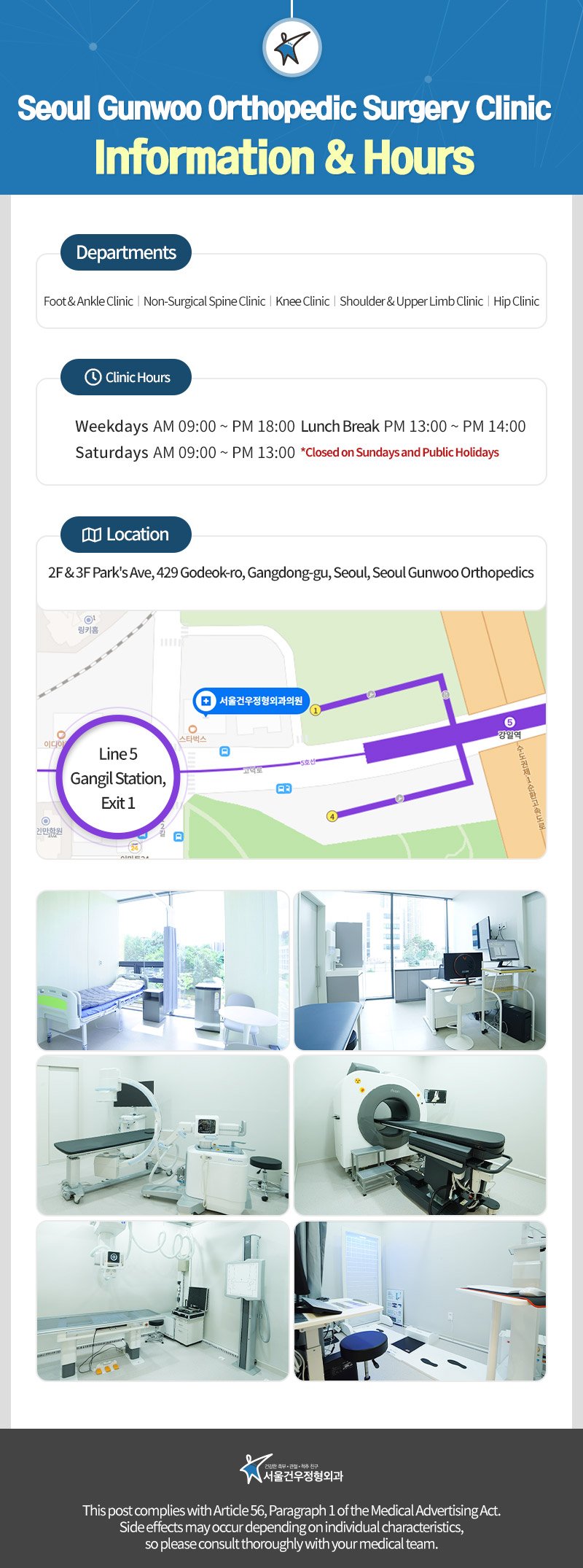
Practical preparation can make a consultation more focused. Bring relevant records if available, note your questions, and identify the symptoms or activities you most want to discuss. Seoul Gunwoo Orthopedic Surgery Clinic is located at 2F-3F, 429, Godeok-ro, Gangdong-gu, Seoul, Republic of Korea, and can be reached by phone. The clinic also lists fees for selected non-covered services, including foot and ankle ultrasound. These charges are separate from any surgical plan.
Understand the listed non-covered fees
The clinic publishes fees for selected non-covered services, including ankle and foot ultrasound. These are specific service charges and should not be read as a price for surgery or as a complete estimate for care. Ask which assessment, if any, is relevant to your situation and what charges apply before proceeding. The published amounts below are presented for the services named, without extending them to other procedures.
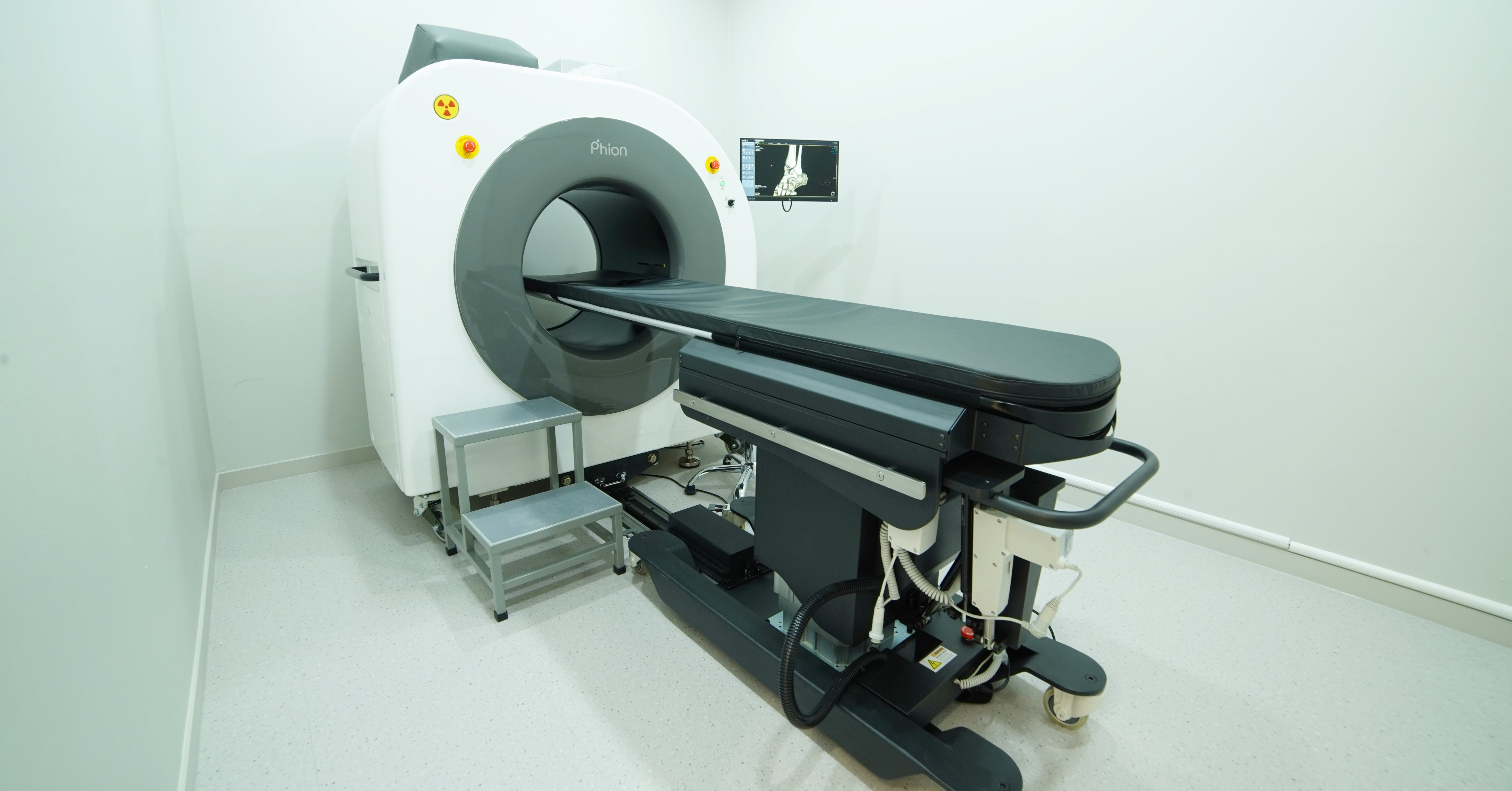
Some patients may want to ask whether imaging or movement-related assessment is relevant to the consultation. The clinic’s listed non-covered services include gait analysis, motion analysis, and dynamic plantar-pressure measurement, as well as a combined motion and pressure assessment. Confirm that a service is appropriate for your concern before arranging it. These listed fees do not indicate that every patient needs each assessment, and they are not surgery prices. Ask about the specific service and its charge when discussing your care.
Published fees apply to the named non-covered services, not to ankle surgery as a package. Confirm which assessment is relevant to your case and the charge for that specific service before proceeding.
Prepare records and questions before visiting
Before your appointment, write down the main symptoms you want assessed and any questions about diagnosis or treatment. If you have prior imaging, reports, or details of previous care, bring them if available. You can also note what activities are affected so the discussion stays connected to your priorities. This preparation does not replace an examination, but it can help you use the consultation time effectively.
Consider organizing your questions into a few practical topics: what condition is being evaluated, what findings matter, and what options may be relevant. If surgery comes up, ask about its purpose and what additional discussion or planning is needed. If a non-covered assessment is suggested, ask what it is intended to clarify and confirm its fee. There is no need to decide on a procedure before you understand the assessment and proposed plan. A clear record of the answers can help you review the discussion afterward and follow up on anything that remains uncertain.
Bring relevant records, identify your main concerns, and prepare questions about the assessment and options. If a non-covered service is discussed, confirm its purpose and fee rather than assuming it is required.
Contact and appointment planning
Seoul Gunwoo Orthopedic Surgery Clinic is at 2F-3F, 429, Godeok-ro, Gangdong-gu, Seoul, Republic of Korea. For appointment or consultation inquiries, call 02-426-9876. When contacting the clinic, explain that you are seeking assessment for an ankle or foot concern and ask what information to bring. This can help you prepare for a discussion related to the clinic’s listed orthopedic services.
Before visiting, gather any relevant records you already have and make a short list of questions. If you are calling about a specific concern, mention whether it relates to an ankle ligament, Achilles tendon, cartilage, arthritis, fracture, or heel pain. The clinic can help address practical appointment questions by phone. Use the consultation to clarify your individual assessment and treatment options. If a fee applies to a particular non-covered service, ask about that named service rather than assuming the charge applies to surgery.
Choose questions that will help you understand the next step, such as what assessment is planned and what information may be useful to bring. For fee questions, refer to the specific service being discussed, since listed charges apply to individual non-covered items rather than a surgery package. A focused call and a prepared visit can make it easier to discuss your concern with the medical staff.
Frequently Asked Questions
Q.What kind of clinic is Seoul Gunwoo Orthopedic Surgery Clinic?
A.Seoul Gunwoo Orthopedic Surgery Clinic provides orthopedic care, including foot and ankle services. Its listed care includes ankle ligament, Achilles tendon, cartilage, arthritis, fracture, bunion, and heel pain concerns.
Q.Who may consider an ankle consultation at Seoul Gunwoo Orthopedic Surgery Clinic?
A.People seeking assessment for ankle ligament, Achilles tendon, cartilage, arthritis, or fracture concerns may ask about the clinic’s listed services. The appropriate care depends on an individual assessment.
Q.What ankle treatments and procedures does Seoul Gunwoo Orthopedic Surgery Clinic list?
A.Its published surgical work includes ankle ligament repair and reconstruction, Achilles tendon repair, and care related to ankle cartilage, arthritis, and fractures. The clinic also lists non-surgical heel pain care, including assessment, stretching, and shockwave therapy.
Q.What should I prepare before visiting Seoul Gunwoo Orthopedic Surgery Clinic?
A.Bring relevant records if available and prepare questions about your symptoms, assessment, and treatment options. The clinic lists selected non-covered fees, including ankle and foot ultrasound, so ask about the charge for any specific service discussed.
Q.Where is Seoul Gunwoo Orthopedic Surgery Clinic, and how can I contact it?
A.The address is 2F-3F, 429, Godeok-ro, Gangdong-gu, Seoul, Republic of Korea. Call 02-426-9876 for appointment or consultation inquiries.
Clinic Information
| Clinic | Seoul Gunwoo Orthopedic Surgery Clinic |
|---|---|
| Specialty | Orthopedics |
| Address | 2F-3F, 429, Godeok-ro, Gangdong-gu, Seoul, Republic of Korea |
| Phone | 02-426-9876 |
| Website | https://seoulfoot.sillajewelry.com |
| Specialist | Specialist care |
 Seoul Gunwoo Orthopedic Surgery Clinic