
Achilles tendon surgery reviews Seoul: How to assess patient feedback
People searching for Achilles tendon surgery reviews often want to know what treatment and recovery feel like in practice. Reviews can provide perspectives on communication and the practical side of visiting a clinic, but they cannot establish which treatment is right for another patient. Seoul Gunwoo Orthopedic Surgery Clinic provides Achilles tendon care, and its published surgical work includes Achilles tendon repair. A useful review is one starting point for questions, not a substitute for an individual orthopedic assessment.
Look beyond an overall rating
A rating alone rarely explains the nature of an Achilles tendon injury or the reasons for a particular treatment. Read the details: Does the writer describe how the injury was assessed? Do comments explain whether the medical staff discussed treatment options and recovery? A review that distinguishes the consultation from the recovery period is generally more useful than a brief expression of satisfaction or disappointment. Keep in mind that the writer’s diagnosis, health history, and goals may differ from yours.
Consider when the review was written in relation to treatment. An account written soon after a procedure may describe the appointment and early recovery, while a later account may focus on rehabilitation or a return to daily activities. Neither tells the whole story on its own. It is also useful to notice whether a review identifies the type of care being discussed: an initial consultation, imaging, surgery, and follow-up are distinct parts of the patient experience. Specific observations are more informative than broad claims. If a detail matters to you, such as how to arrange follow-up or what assistance you might need after surgery, add it to a list of questions for the attending doctor rather than relying on a reviewer’s situation.
Patient feedback can help you identify practical questions about appointments and recovery. The treatment decision still depends on your injury, examination, and discussion with the medical staff.
Separate experience from medical advice
Online accounts may describe pain, mobility, or time away from work, but those experiences are individual. Differences in the injury, treatment approach, and rehabilitation plan can affect the course of recovery. A reviewer’s account should not be treated as a recommended timeline or as proof that surgery is necessary. Instead, use it to frame a question: “How might my injury affect the treatment and rehabilitation plan?” The answer should come from an assessment of your own condition.
Be cautious with reviews that present a single treatment as suitable for everyone or promise a particular outcome. Achilles tendon injuries are assessed in context, and the attending doctor can explain the findings and the reasons for a recommendation. Ask what a proposed operation is intended to address, what alternatives are relevant to your case, and what the recovery plan would involve. It is equally reasonable to ask about uncertainties, including whether further assessment is needed before a decision. Understanding the reasoning behind a recommendation matters more than matching another patient’s story. If you are comparing accounts, pay attention to whether the circumstances described are similar to yours, while recognizing that a written review cannot provide a full medical history.
Bring focused questions to your visit
Before a consultation, note when your symptoms began, what you were doing at the time, and how the problem affects walking or other activities. If you have had previous examinations or treatment, bring relevant records and imaging if available. This information can help the medical staff understand the course of the problem. You can also write down the activities you hope to return to, whether those are everyday tasks, work, or sport.
Questions do not need to be technical. Ask what the examination suggests, whether imaging would help clarify the diagnosis, and what treatment choices apply to you. If surgery is discussed, ask how the operation and rehabilitation relate to your particular injury. You can also ask what support you might need at home and when follow-up would be arranged. Write down the answers or bring someone with you if that would help you remember the discussion.
Reviews can also prompt practical questions about communication. For example, you might ask how instructions will be explained, whom to contact if a concern arises after treatment, and how rehabilitation progress will be checked. These questions are useful whether you are deciding on surgery or exploring another approach. The aim is not to find a story identical to your own, but to leave the consultation with a clear understanding of the proposed next steps.
Achilles tendon surgery reviews Seoul: Understanding treatment and recovery
The Achilles tendon connects the calf muscles to the heel and contributes to movements such as walking and pushing off the ground. Problems involving the tendon can range from persistent pain to a rupture, so the appropriate response depends on the diagnosis. Seoul Gunwoo Orthopedic Surgery Clinic provides Achilles tendon care and includes Achilles tendon repair among its published surgical work. The attending doctor can explain whether surgery is relevant after reviewing your symptoms and examination findings.
Discussing an Achilles tendon injury
An assessment begins with the details of the problem: where it hurts, how it started, and whether there was a sudden change in function. The attending doctor may examine the foot and ankle and consider whether imaging would help. A discussion should also cover your activities, prior treatment, and any health factors relevant to healing. The purpose is to understand the injury before deciding on a plan, rather than choosing a procedure based on a review or an assumed diagnosis.
Some patients seek help after a sudden injury; others make an appointment because symptoms persist or interfere with activity. These situations need not lead to the same treatment. Ask the attending doctor to explain the diagnosis in plain language and identify the part of the tendon or surrounding area involved. If Achilles tendon repair is being considered, ask what the procedure is intended to address and how the recommendation compares with other options appropriate to your case. It is also reasonable to discuss how your work, home arrangements, and activity goals may affect planning. The decision should follow an individual assessment and a conversation about potential benefits, risks, and rehabilitation. No review can determine those details for you.
Achilles tendon care starts with identifying the problem and its effect on function. If repair is recommended, ask the attending doctor to explain the rationale and the expected rehabilitation plan for your circumstances.
Points to consider before treatment
Before agreeing to a procedure, discuss the potential benefits and risks with the attending doctor. Surgical risks can include infection, wound-healing problems, nerve injury, blood clots, and a further tendon injury; the relevance of each risk depends on the individual and the procedure. Ask what symptoms should prompt a call and which require urgent care. Changes in function may take time depending on your condition and rehabilitation, so discuss how progress will be assessed rather than relying on a fixed timeline from an online account.
Preparation also involves planning for the period after treatment. Ask whether you will need help getting home, moving around, or managing work and household responsibilities. The medical staff can explain any instructions about medication, wound care, activity, and follow-up that apply to your plan. Do not start, stop, or change prescribed medication solely because of something you read online; discuss it with the attending doctor. If you develop severe or rapidly worsening symptoms, seek medical advice promptly. Sudden chest pain or shortness of breath warrants emergency medical attention. Knowing what to do if a concern arises is part of informed preparation. Your treatment team can help you distinguish routine questions from problems that need more immediate attention.
Planning rehabilitation and follow-up
Rehabilitation is part of the conversation when Achilles tendon repair is considered. Ask how movement, weight-bearing, and activity will be managed in your particular case. The plan may change as healing is assessed, so follow the instructions given by the attending doctor rather than copying another patient’s exercise schedule. Before leaving an appointment, make sure you understand any restrictions and how to arrange the next review. Clear instructions can help you plan around daily responsibilities.
Recovery goals can differ: one person may want to walk comfortably at work, while another hopes to return to running. Tell the medical staff what matters to you and ask how progress toward those activities will be evaluated. It can help to keep a record of questions or changes you notice between appointments. If instructions are unclear or symptoms concern you, contact the medical staff rather than assuming that another patient’s experience applies.
| Discussion topic | Question to ask |
|---|---|
| Diagnosis | What does my examination suggest about the tendon? |
| Treatment | Why is this option being recommended for me? |
| Rehabilitation | What activity guidance should I follow after treatment? |
| Follow-up | How will my recovery be reviewed, and whom should I contact with concerns? |
Use the checklist as a starting point, not as a prescribed treatment plan. Your attending doctor may add questions or instructions based on your examination and proposed care. If you are considering surgery, ask for an explanation of any preparation required and any changes you may need to make at home. A clear discussion of follow-up is especially useful because the details of rehabilitation depend on the treatment and the individual patient.
Achilles tendon surgery reviews Seoul: Choosing and preparing for a consultation
A consultation offers an opportunity to move from general research to advice about your own condition. Seoul Gunwoo Orthopedic Surgery Clinic provides orthopedic care, including Achilles tendon care, and its published surgical work covers Achilles tendon repair. The medical staff can discuss your symptoms and any relevant treatment options. When comparing reviews, focus on questions you can verify during your visit, including how your diagnosis will be explained and what follow-up would involve.
Understanding the medical staff’s background
Dr. Choi Hong Joon has a background in foot and ankle medicine, clinical practice, and research. His listed training includes a fellowship at the Seoul Foot Center and a former visiting professorship at a foot and ankle center. Dr. Min Kyong Dae’s profile lists orthopedic, arthroscopy, and sports-medicine training. These backgrounds provide context for a consultation, while the appropriate assessment and treatment remain specific to each patient.
When choosing a clinician, it is reasonable to ask about experience relevant to your diagnosis and the approach being considered. You might ask who will assess you, what the examination will involve, and how the medical staff will explain the findings. If surgery is recommended, ask who will perform it and how postoperative care will be coordinated. A clinician’s background is one part of your decision; your understanding of the diagnosis, the proposed treatment, and the rehabilitation plan also matters. Make room for a discussion of alternatives and questions about risks. If you have previous records or imaging, bring them to help inform the conversation. The aim is to make a decision based on your circumstances rather than on a general impression from ratings alone.
Credentials and patient feedback offer useful context, but neither replaces a discussion of your own diagnosis. A productive consultation should leave you with a clear explanation of the proposed care and its follow-up.
Fees and practical planning
Costs depend on the assessment and treatment involved. Ask for an explanation of the expected charges before proceeding, including whether individual items are covered. Seoul Gunwoo Orthopedic Surgery Clinic publishes fees for selected non-covered services, including foot and ankle ultrasound. These are individual charges, not an Achilles tendon surgery package. A surgical estimate should be discussed in relation to the proposed procedure and your circumstances.
When reviewing an estimate, ask what is included and whether additional assessments, rehabilitation, or other services might be billed separately. If imaging has been recommended, ask what it is intended to clarify and how the result will inform the treatment decision. Keep the distinction between a published individual service fee and the cost of a complete course of care: an ultrasound charge, for example, does not represent the cost of surgery. If you have insurance, check how your coverage applies to the proposed services. You can also ask the medical staff for a written breakdown so that you can review it before making a decision. Financial planning is most useful when it is linked to the actual plan recommended for you.
Location, hours, and appointment preparation
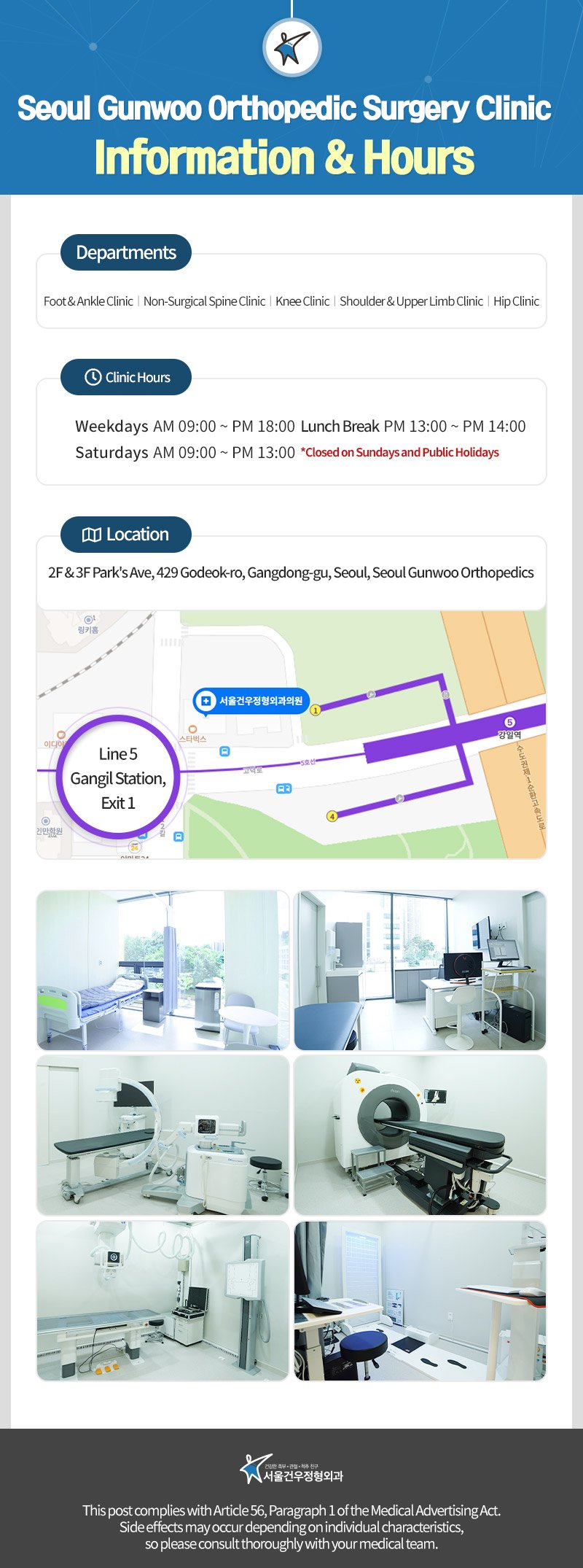
Seoul Gunwoo Orthopedic Surgery Clinic is near Gangil Station, Exit 1. Consultations are available Monday through Friday from 9:00 a.m. to 6:00 p.m., with a weekday lunch break from 1:00 p.m. to 2:00 p.m. Saturday hours are 9:00 a.m. to 1:00 p.m. Our clinic is closed on Sundays and public holidays. Consider your travel and mobility needs when planning a visit, particularly if walking is uncomfortable.
Bring a concise history of your symptoms and any relevant records. A list of medications and previous treatments can also help the attending doctor understand your situation. If you are seeking another opinion after an earlier assessment, bring available imaging and reports rather than relying on memory alone. Write down the activities affected by your symptoms and the questions you most want answered. This preparation can make the consultation easier to follow.
| Published non-covered service | Fee |
|---|---|
| Foot ultrasound | ₩80,000–140,000 |
| Ankle ultrasound | ₩80,000–140,000 |
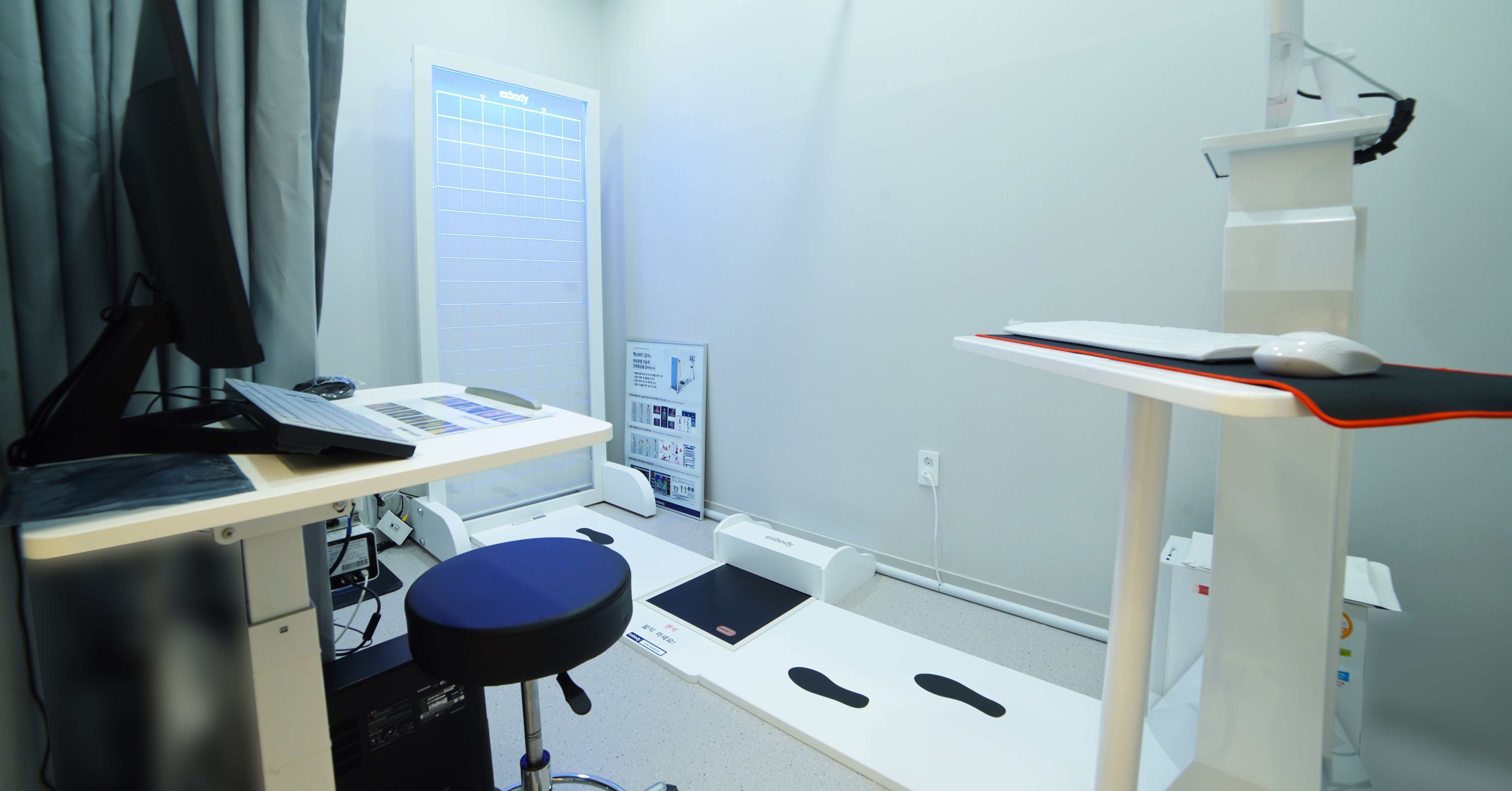
| Gait analysis | ₩50,000 |
| Motion analysis | ₩70,000 |
The fees above apply only to the named services. They should not be used to estimate the cost of Achilles tendon repair or a complete treatment plan. At your visit, ask which assessments are relevant to your symptoms and how each would contribute to the diagnosis. If surgery is discussed, request a separate explanation of the proposed care and associated charges. This approach helps you compare information without assuming that every patient needs the same services.
Frequently Asked Questions
Q.What does Seoul Gunwoo Orthopedic Surgery Clinic offer for Achilles tendon problems?
A.Seoul Gunwoo Orthopedic Surgery Clinic provides Achilles tendon care, and its published surgical work includes Achilles tendon repair.
Q.Who might consider an appointment?
A.Someone with Achilles tendon symptoms or concerns about an injury can seek an orthopedic assessment. The attending doctor can discuss the findings and appropriate options.
Q.Does Achilles tendon care always involve surgery?
A.Surgery is not a decision to make from a review alone. The attending doctor can discuss whether Achilles tendon repair or another approach is appropriate after an assessment.
Q.What should I bring to a consultation?
A.Bring relevant medical records and imaging if available, along with a list of medications, previous treatment, and questions about your symptoms.
Q.Where is Seoul Gunwoo Orthopedic Surgery Clinic, and how can I contact it?
A.Our clinic is at 2F–3F, 429 Godeok-ro, Gangdong-gu, Seoul, Republic of Korea. Call 02-426-9876 to ask about an appointment.
Clinic Information
| Clinic | Seoul Gunwoo Orthopedic Surgery Clinic |
|---|---|
| Specialty | Orthopedics |
| Address | 2F-3F, 429, Godeok-ro, Gangdong-gu, Seoul, Republic of Korea |
| Phone | 02-426-9876 |
| Website | https://seoulfoot.sillajewelry.com |
| Specialist | Specialist care |
 Seoul Gunwoo Orthopedic Surgery Clinic