
Choosing an Achilles Tendon Surgery Specialist in Seoul
When searching for an Achilles tendon surgery specialist in Seoul, it is important to distinguish a clinic’s general orthopaedic category from a specific credential in Achilles surgery. Seoul Gunwoo Orthopedic Surgery Clinic is an orthopaedics clinic that provides Achilles tendon care, including surgical repair. The clinic’s published profiles describe foot and ankle experience as well as orthopaedic training. Whether surgery is suitable depends on an assessment of the tendon and the person’s circumstances, rather than on a search term alone.
What Achilles tendon care involves
The Achilles tendon connects the calf muscles to the heel and plays a central role in walking and pushing off the foot. An injury can cause pain, swelling, weakness, or difficulty with everyday movement. The right response depends on the type and extent of the problem, as well as a person’s overall health and activity needs. At Seoul Gunwoo Orthopedic Surgery Clinic, Achilles tendon care includes assessment and surgical repair among the clinic’s published foot and ankle services.
A consultation is a chance to describe how the symptoms began, what activities are affected, and whether the problem has changed over time. The attending doctor can assess the concerns and discuss what care may be appropriate. Surgery is not automatically required for every Achilles tendon problem; the decision depends on clinical findings and individual factors. Ask what the proposed treatment is intended to address and what alternatives may be suitable. Understanding those points helps make the care plan relevant to the actual diagnosis.
Achilles tendon care starts with understanding the injury, not assuming that every case needs an operation. An assessment helps determine whether repair or another approach fits the individual situation.
Understanding the clinic’s orthopaedic background
Seoul Gunwoo Orthopedic Surgery Clinic provides care in orthopaedics, including foot and ankle concerns. Its published profiles describe Dr. Choi Hong Joon’s background in foot and ankle medicine, clinical practice, and research. Dr. Min Kyong Dae’s profile lists orthopaedic, arthroscopy, and sports-medicine training. These details can help patients understand the clinic’s stated clinical background, while the consultation remains the place to discuss the experience relevant to an individual Achilles tendon concern.
When choosing care, focus on clear communication about the diagnosis, the reasoning behind a suggested procedure, and the expected follow-up. It can be useful to ask how the tendon problem was assessed, what the repair involves, and how recovery planning will be tailored to the patient. Professional profiles provide context, but they do not replace a direct discussion of the specific injury. Patients should also confirm whether interpretation or language support is available before arranging a visit, because an English website alone does not establish that an English-speaking clinician or interpreter will be present.
Questions to raise during an assessment
Bring a concise account of when symptoms began, how they affect movement, and any relevant prior treatment. Mention health conditions and medicines that may matter to a procedure or recovery. If symptoms have changed, describe that clearly. These details help the medical staff understand the concern and guide the conversation toward an appropriate assessment.
Ask what findings support the proposed care plan and whether surgery is being considered. If repair is recommended, request an explanation of the procedure, follow-up, and recovery expectations for the individual case. It is also reasonable to ask what costs are separate from treatment and whether interpretation can be arranged. Clear answers before making a decision support informed, practical planning.
Individual recovery needs differ, so avoid relying on generic timelines or another person’s experience when planning work, exercise, or travel. Discuss activity restrictions and follow-up directly with the attending doctor. If the plan changes after assessment, ask what prompted the change and how it affects the next steps. A well-informed decision is based on the diagnosis, a clear explanation of options, and realistic planning for care and recovery.
Achilles Tendon Surgery Specialist in Seoul: Assessment and Repair
Assessment helps clarify whether an Achilles tendon concern may benefit from surgery or another form of care. Seoul Gunwoo Orthopedic Surgery Clinic lists Achilles tendon repair among its published surgical work and foot and ankle care services. The medical staff can review symptoms and clinical findings before discussing the appropriate next step. The purpose of a consultation is to connect the treatment decision to the individual diagnosis, not to assume that an operation is needed.
How the treatment decision is approached
A careful assessment considers the patient’s symptoms, the circumstances of the injury, and relevant clinical findings. Foot or ankle ultrasound is among the clinic’s listed services and may be discussed as part of assessment where appropriate. The specific evaluation depends on the case. Patients can explain which movements are difficult, how symptoms affect daily routines, and what they hope to return to doing.
When surgery is proposed, ask the attending doctor to explain why repair is being considered and what the procedure is intended to address. The clinic’s published surgical work includes Achilles tendon repair, but the appropriate plan depends on the individual’s condition. It is useful to discuss potential alternatives, follow-up, and recovery planning before deciding. The treatment recommendation should be based on clinical assessment and explained in terms that the patient understands. Patients should feel able to raise questions about both the procedure and the practical demands of recovery.
Assessment guides the decision between surgery and other care options. If repair is recommended, make sure the reason for it, the expected follow-up, and recovery planning are clear for your particular case.
What to expect when discussing Achilles tendon repair
Achilles tendon repair is included in the clinic’s published surgical services. The details of a procedure depend on the specific tendon problem and the attending doctor’s assessment. Before agreeing to surgery, ask what repair is being recommended, how the diagnosis informs that recommendation, and what follow-up will involve. These questions help keep the discussion focused on the individual case rather than broad assumptions about tendon injuries.
Recovery planning is part of treatment, not an afterthought. Ask how activity may need to change and what follow-up is planned, since these details depend on the procedure and the person’s condition. The medical staff can explain what guidance applies to the individual situation. Changes may take time depending on individual condition, and recovery expectations should be discussed directly rather than inferred from general accounts. Clarify how to contact the clinic with questions after treatment and what signs or concerns should prompt medical advice.
Assessment services and listed non-covered fees
The clinic lists ultrasound services for the foot and ankle, along with movement and pressure assessments. These services are distinct from surgery, and a listed fee for an assessment is not a price for Achilles tendon repair. Ask which assessments, if any, are relevant to the clinical question and whether a charge applies. The table shows selected published non-covered fees, so it can help patients identify specific items to discuss when planning an appointment.
Not every listed assessment is necessary for every patient. The attending doctor can explain whether an ultrasound or a movement-related measurement is relevant to the concern. Before proceeding, confirm which service is being recommended and what it covers. The fees below refer only to the named services or room charges; they should not be interpreted as the cost of surgery.
| Service or charge | Published fee |
|---|---|
| Ankle ultrasound | ₩80,000–140,000 |
| Foot ultrasound | ₩80,000–140,000 |
| Gait analysis | ₩50,000 |
| Motion analysis | ₩70,000 |
| Dynamic plantar-pressure measurement | ₩100,000 |
| Motion analysis with dynamic plantar-pressure measurement | ₩150,000 |
| Single-room surcharge | ₩200,000 |
| Twin-room surcharge | ₩100,000 |
| Special single-room surcharge | ₩250,000 |
| English medical certificate | ₩20,000 |
Use the fee list as a basis for asking about the exact service planned for your visit. The amounts apply to the named non-covered items and do not set a surgical package price. If surgery is being considered, discuss the expected costs and any separate charges with the clinic before proceeding. Confirming the planned assessment and associated fees in advance can make appointment preparation more straightforward.
Planning Achilles Tendon Surgery Care in Seoul
Planning for Achilles tendon care involves more than choosing a procedure. Patients should understand the assessment, the reason for any proposed repair, and the follow-up needed for their individual condition. Seoul Gunwoo Orthopedic Surgery Clinic provides orthopaedic care for foot and ankle concerns and lists Achilles tendon repair among its surgical work. Before booking, contact the clinic to confirm language support or interpretation, and discuss practical details directly with the medical staff.
Preparing for a consultation
Before visiting, make notes about when the symptoms began, how they affect daily activities, and any previous care related to the concern. Bring relevant medical information and a current list of medicines if available. These details can help the medical staff understand the situation and focus the assessment. If language support is important, contact the clinic before booking to ask whether an interpreter or English-speaking clinician will be available.
Prepare questions about the diagnosis, the options being considered, and what the next steps may involve. If surgery is discussed, ask about the proposed repair, recovery planning, and follow-up. Patients can also ask which assessments are relevant and whether non-covered fees apply to the services being considered. Arriving with a clear account of symptoms and practical questions can make the consultation more focused. Do not assume that online English-language content confirms language support during an appointment; verify that detail directly with the clinic before arranging a visit.
Good preparation means bringing useful information and asking clear questions about diagnosis, treatment, and recovery. Confirm language support in advance rather than assuming it will be available during the appointment.
Discussing recovery and follow-up
Recovery planning should reflect the procedure, the tendon condition, and the person’s daily needs. Ask the attending doctor what follow-up is expected and how activity guidance will be provided. Work, travel, and exercise plans may need individual discussion; general advice cannot replace instructions for a particular case. Clear communication about follow-up helps patients know whom to contact if questions arise after treatment.
It is sensible to clarify which symptoms or changes should lead to contacting the clinic and how follow-up appointments will be arranged. If instructions are unclear, ask for them to be explained again before leaving. The timing and course of recovery vary with the individual condition, so avoid treating a general timeline as a promise. Ongoing care is shaped by clinical findings and the attending doctor’s guidance. Keep the clinic’s contact details available and follow the plan provided for your case.
Contact, location, and appointment details
Seoul Gunwoo Orthopedic Surgery Clinic is located at 2F-3F, 429, Godeok-ro, Gangdong-gu, Seoul, Republic of Korea. The clinic’s listed phone number is 02-426-9876. Contact the clinic to discuss an appointment, the concern to be assessed, and language support before booking. This is especially useful for patients who need interpretation or want to confirm that communication arrangements can be made for their visit.
When contacting the clinic, explain that the appointment concerns an Achilles tendon problem and ask what information to bring. If surgery has already been discussed elsewhere, bring relevant records when available and ask whether they can assist with the assessment. Confirm practical arrangements directly with the clinic, including the service being considered and any applicable non-covered charges. The address and phone number provide a direct way to ask about booking and visit preparation.
For a first conversation, prioritize the reason for the visit, current symptoms, and any questions about evaluation or treatment. If a specific assessment is planned, ask whether preparation is needed. Language support should be confirmed before booking, since an English website does not establish that an English-speaking clinician or interpreter will be available. These simple checks help set clear expectations for communication and the appointment.
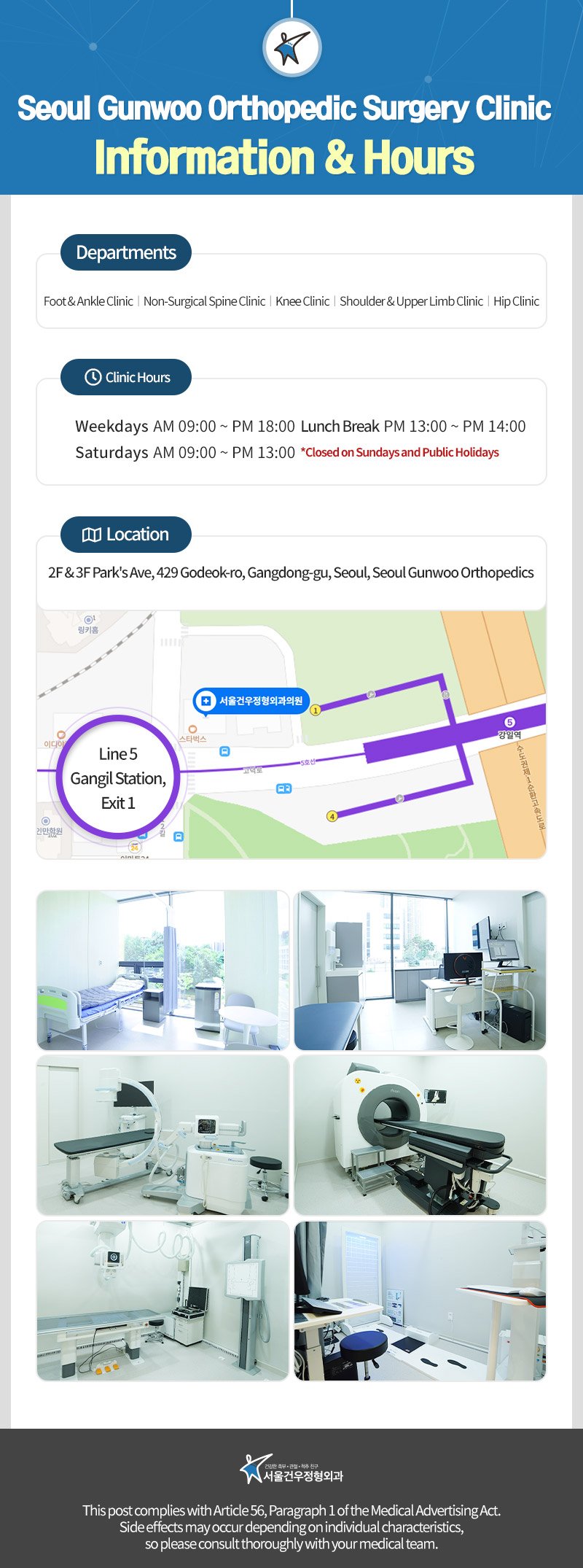
Clinic Information
| Clinic | Seoul Gunwoo Orthopedic Surgery Clinic |
|---|---|
| Specialty | Orthopedics |
| Address | 2F-3F, 429, Godeok-ro, Gangdong-gu, Seoul, Republic of Korea |
| Phone | 02-426-9876 |
| Website | https://seoulfoot.sillajewelry.com |
| Specialist | Specialist care |
 Seoul Gunwoo Orthopedic Surgery Clinic