
Ankle surgery hospital in Seoul: understanding your care options
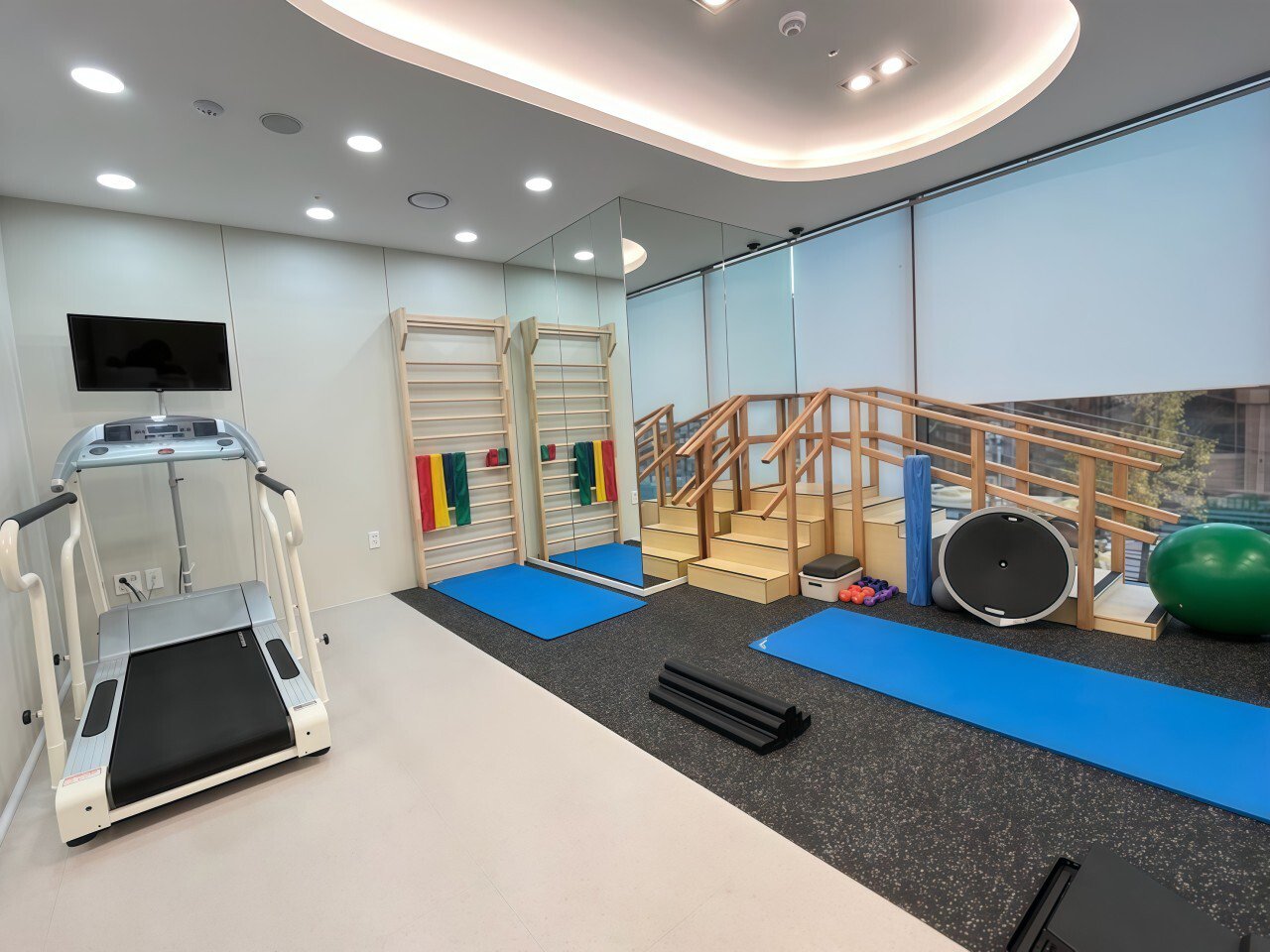
Choosing an ankle surgery hospital involves more than looking for an operating room. It is useful to understand how the clinic evaluates your symptoms, what diagnostic resources are available, and how a treatment plan is discussed. Seoul Gunwoo Orthopedic Surgery Clinic is an orthopedic clinic in Seoul with operating rooms, inpatient rooms, CT, ultrasound, gait analysis, and rehabilitation in one building. Whether surgery is appropriate depends on an individual medical assessment, not on the availability of a particular facility alone. An initial consultation can help clarify which information is needed to guide the next steps.
Start with the cause of the ankle problem
Ankle pain, instability, or difficulty walking can have different causes, so identifying the concern is an important first step. The medical staff can review the symptoms and assess the ankle before discussing possible care. Relevant factors may include when the problem began and how it affects daily movement. A treatment decision should follow an individual assessment. Not every ankle concern requires surgery, and the appropriate approach depends on the clinical findings.
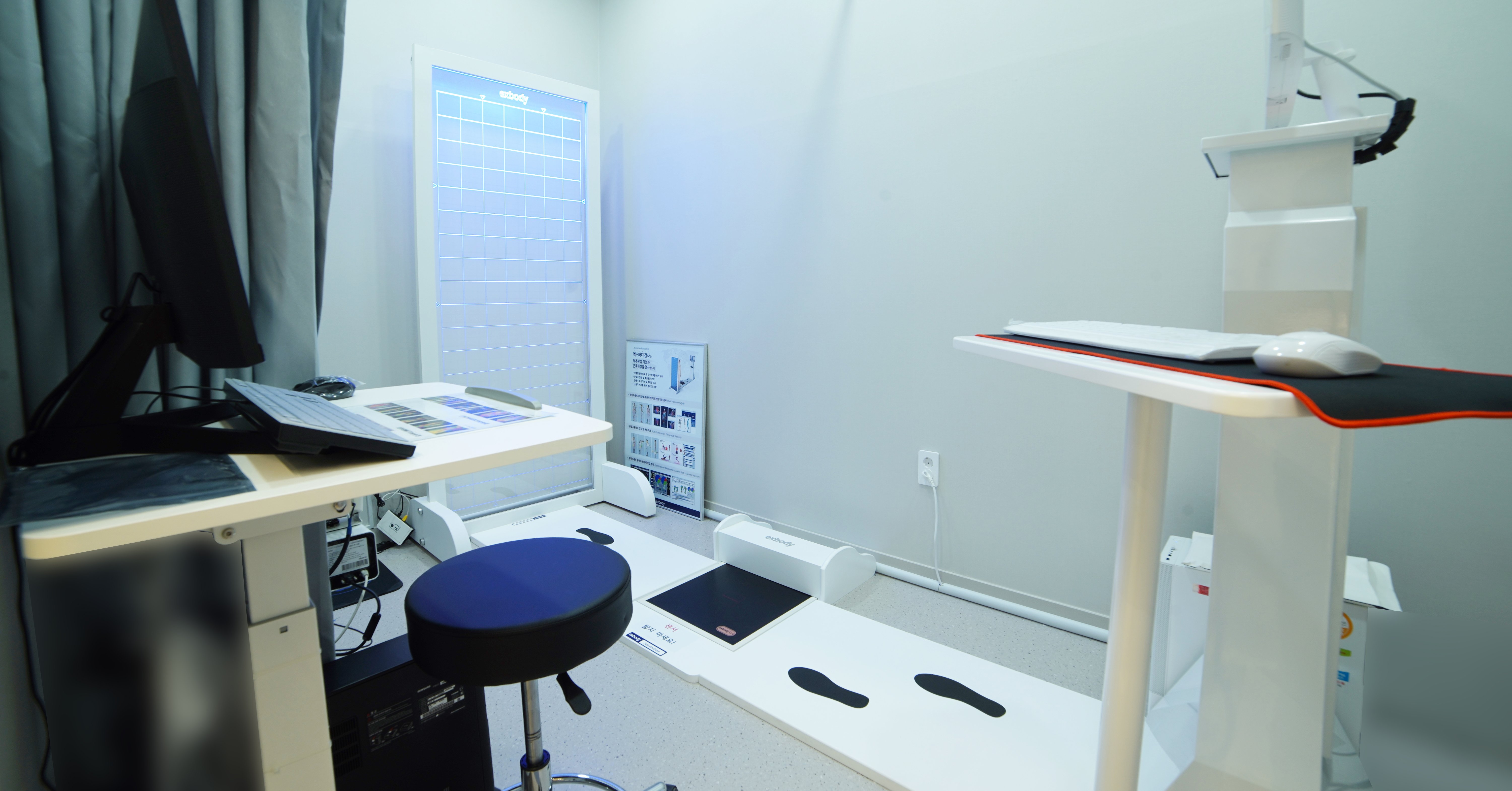
When preparing for a consultation, describe what you notice in practical terms: where discomfort occurs, which movements are difficult, and whether symptoms affect walking or other routine activities. If you have previous imaging or medical records, bringing them can help provide context. The clinic has CT and ultrasound available in the same building, along with gait analysis. These resources may support evaluation when appropriate, but the medical staff determines which assessments are relevant. Tests should be selected to answer a clinical question rather than assumed to be necessary for every patient. The consultation is also an opportunity to discuss your priorities and understand what further evaluation, if any, is recommended.
Good ankle care starts by understanding the problem, not by assuming surgery is the answer. An assessment helps connect symptoms and examination findings to an appropriate next step.
Discussing surgery as one possible option
Surgery may be discussed when an assessment indicates that an operative approach should be considered. The decision depends on the individual situation and should be explained in relation to the diagnosis and treatment goals. At Seoul Gunwoo Orthopedic Surgery Clinic, operating rooms and inpatient rooms are available in the same building as diagnostic and rehabilitation resources. The presence of surgical facilities does not mean that surgery is suitable for every ankle condition. Ask the attending doctor to explain the reasoning behind any proposed plan.
Before deciding, make sure you understand the purpose of the proposed procedure, what it is intended to address, and what other care options may be relevant. Ask how the plan relates to your examination and imaging, and what recovery and follow-up may involve in your case. Details can differ according to the condition and the procedure being considered, so a general description cannot replace a personal medical discussion. Seoul Gunwoo Orthopedic Surgery Clinic’s listed facilities include operating rooms, inpatient rooms, and rehabilitation in one building. These facilities support different parts of care, while the medical team determines the appropriate course based on each patient’s needs. Take time to raise questions before consenting to treatment.
What the clinic’s facilities can support
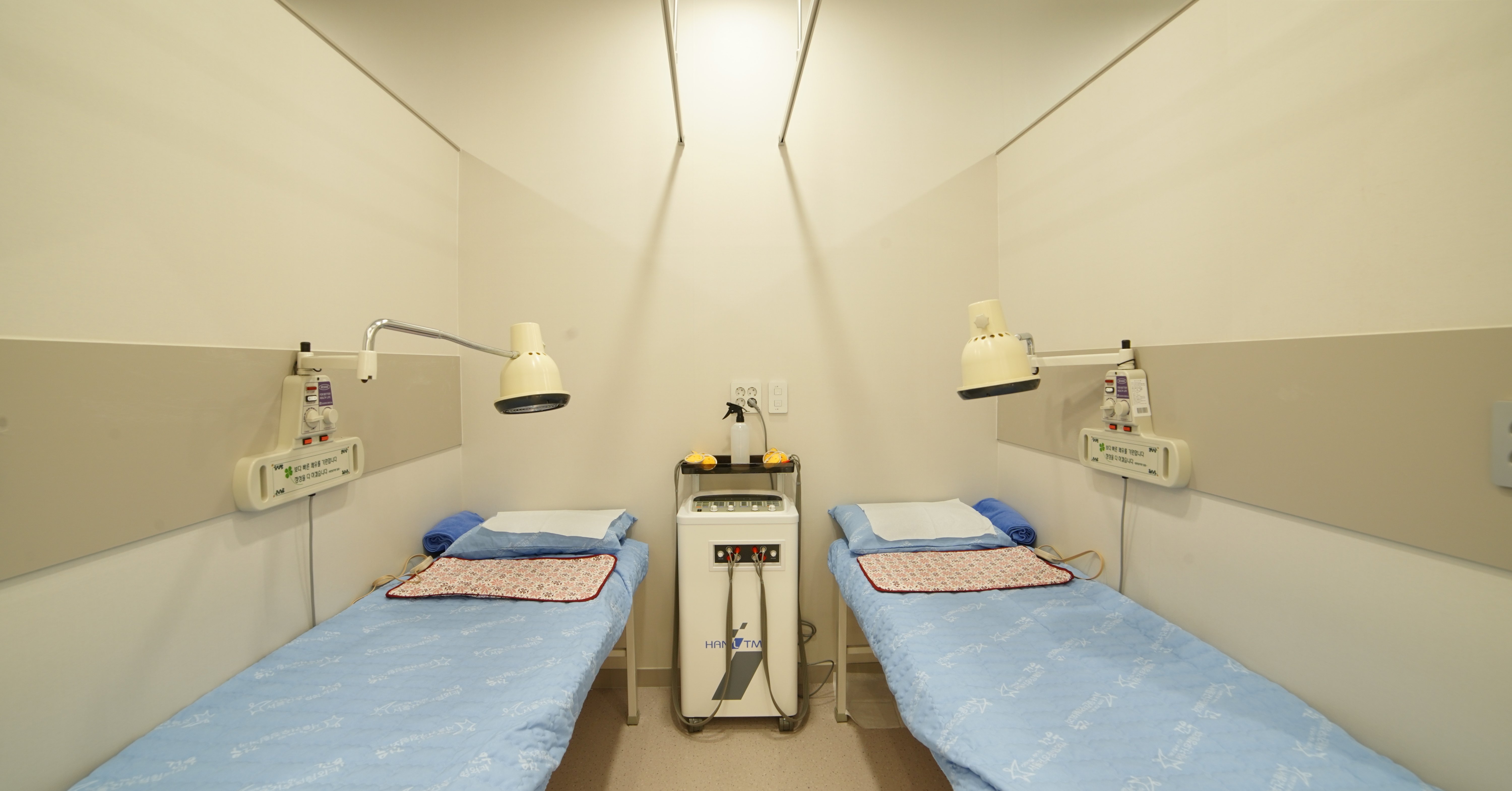
Having diagnostic and care resources in one building can make it easier to discuss evaluation and next steps in one setting. Seoul Gunwoo Orthopedic Surgery Clinic lists CT, ultrasound, gait analysis, operating rooms, inpatient rooms, and rehabilitation among its facilities. Which resources are relevant depends on the medical assessment. Availability does not mean every patient needs every test or service. The medical staff can explain the role of any recommended assessment in relation to your symptoms.
Gait analysis can provide information about walking patterns, while ultrasound and CT are imaging options available at the clinic. The reference information also lists dynamic plantar-pressure measurement and motion analysis among non-covered services. These assessments should not be treated as automatic components of ankle care; ask why a specific test is being considered and what it may help clarify. If surgery is discussed, ask how the clinic’s operating and inpatient facilities relate to the proposed plan. Rehabilitation is also available in the building, but the timing and content of any rehabilitation plan should be discussed individually. Clear explanations help patients understand how each facility or assessment connects to their own care.
| Listed service or facility | Published non-covered fee |
|---|---|
| Ankle ultrasound | ₩80,000–140,000 |
| Foot ultrasound | ₩80,000–140,000 |
| Gait analysis | ₩50,000 |
| Motion analysis | ₩70,000 |
| Dynamic plantar-pressure measurement | ₩100,000 |
| Motion analysis plus dynamic plantar-pressure measurement | ₩150,000 |
These are selected non-covered charges for the named services, not a surgery package or a complete estimate for treatment. The fee for a particular assessment or care plan depends on what is recommended for your situation. Ask the clinic to clarify which services are included in any proposed evaluation and what charges apply before proceeding. Do not interpret an imaging or analysis fee as the cost of ankle surgery. The listed fees can help you prepare questions, while a consultation is needed to discuss the care relevant to your needs.
Ankle surgery hospital in Seoul: clinicians and evaluation
Understanding who may be involved in your care and how an evaluation is approached can make a consultation more productive. Seoul Gunwoo Orthopedic Surgery Clinic is categorized as an orthopedic clinic. Its listed clinicians have backgrounds in orthopedics and foot and ankle care, alongside research and teaching experience described in their profiles. Clinical recommendations should be explained in relation to your own examination and medical history. Ask questions about the diagnosis, the purpose of any proposed test, and how the findings would affect the treatment discussion.
Foot and ankle experience in the clinical team
Dr. Choi Hong Joon has a background in foot and ankle medicine, clinical practice, and research. His profile lists a PhD in Medicine from Korea University, a fellowship at Seoul Foot Center and Inje University Seoul Paik Hospital, and former visiting professor experience at the Foot & Ankle Center at Massachusetts General Hospital. This background is relevant to understanding the clinic’s foot and ankle focus. It does not replace an individual review of your condition. Discuss your symptoms and questions directly during an assessment.
When seeking care for an ankle concern, it is reasonable to ask how a clinician’s experience relates to the problem being assessed. You can explain your symptoms and ask what the examination is intended to determine. If imaging or gait analysis is recommended, ask how it may contribute to the evaluation. A clinician’s academic, research, or clinical background can provide context, but the care plan should still be based on the patient’s findings and needs. Seoul Gunwoo Orthopedic Surgery Clinic lists Dr. Choi Hong Joon’s background in foot and ankle medicine, clinical practice, and research. A clear conversation about your own condition is essential to making sense of any treatment recommendation. Ask for an explanation in language you understand before deciding on next steps.
Clinician backgrounds can help patients understand the experience represented within a care team, but they do not determine an individual diagnosis. The evaluation and recommendations should address your symptoms and findings specifically.
Orthopedic and sports-medicine background
Dr. Min Kyong Dae’s profile lists orthopedic, arthroscopy, and sports-medicine training. It also lists orthopedic specialist training at Severance Hospital, Yonsei University, arthroscopy research experience at Severance Hospital, an adjunct professor role at Yonsei University, and a fellowship at Stanford University Sports Center. These details describe the clinician’s stated professional background. For your own care, ask how the assessment applies to your particular ankle concern.
For people with ankle symptoms related to activity or movement, it can be useful to explain which actions bring on discomfort and whether the issue affects exercise, work, or routine mobility. That information may help the medical staff understand the context of the problem. The clinic’s profile includes orthopedics, arthroscopy, and sports-medicine training among Dr. Min Kyong Dae’s background. A patient’s symptoms and examination remain central to determining the next step. Ask whether any proposed assessment is intended to clarify a specific concern and how its result could influence the care discussion. Recommendations should be explained clearly, including what is known from the evaluation and what remains part of the clinical decision. Do not assume that a particular procedure is indicated solely because a clinician has related training.
Preparing for an informative consultation
A concise account of your symptoms can help keep a consultation focused. Note when the concern started, what makes it better or worse, and how it affects movement. Bring relevant previous records or imaging if available, and make a list of questions about diagnosis, testing, treatment options, and recovery. Preparation helps you take part in the discussion without presuming which treatment will be recommended. Share your priorities, including any practical concerns that may affect care.
It may also help to ask which findings support the proposed diagnosis and whether additional tests are needed. If a procedure is discussed, ask what it aims to address and how the medical staff will determine whether it fits your case. You can ask about rehabilitation, inpatient care, and the likely sequence of follow-up, without assuming that every patient follows the same plan. The clinic has diagnostic and rehabilitation resources in one building, but the relevance of each service depends on the individual assessment. Make sure you understand the proposed next step before agreeing to it. If you have concerns about fees, ask which services are non-covered and what the applicable charges are for your planned care.
Keep the conversation centered on your own symptoms and goals rather than trying to match your situation to someone else’s experience. Treatment decisions are individual, and the same symptom can require different evaluation depending on the clinical context. Ask for clarification whenever a medical term or recommendation is unclear. A useful consultation should leave you with a better understanding of the concern, the reasoning behind the next step, and what questions remain. Clear communication is an important part of informed care.
Ankle surgery hospital in Seoul: fees, planning, and access
Practical planning includes understanding what fees are published, what is part of an evaluation, and how to contact the clinic. Seoul Gunwoo Orthopedic Surgery Clinic lists selected non-covered charges for imaging and movement assessments, but those amounts are not surgery prices. The cost of a surgical plan cannot be inferred from the fee for an ultrasound or gait assessment. Discuss the services recommended for your case and ask about applicable charges before proceeding. The clinic is located in Gangdong-gu, Seoul.
Understanding listed non-covered fees
Published non-covered fees include ankle ultrasound at ₩80,000–140,000 and foot ultrasound at ₩80,000–140,000. Other listed fees include gait analysis, motion analysis, and dynamic plantar-pressure measurement. These are fees for the named services, not a combined estimate for all ankle care. No surgery package price is listed here. Ask which assessment is relevant to your case and confirm the applicable fee before it is carried out.
It is important to separate an assessment charge from the overall cost of treatment. The clinic’s listed fees cover specific non-covered services, while a surgical plan may involve different items depending on the patient and the care proposed. The listed room surcharges are also separate facility-related charges: a single-room surcharge is ₩200,000, a twin-room surcharge is ₩100,000, and a special single-room surcharge is ₩250,000. An English medical certificate is listed at ₩20,000. These amounts apply only to the named items and should not be treated as a total bill or as the price of surgery. Ask the clinic which charges apply to the services and arrangements relevant to your care.
Published fees apply to specific non-covered services and facility items; they are not a quote for ankle surgery. Confirm the items relevant to your care before proceeding so you can distinguish an assessment fee from the broader treatment plan.
Planning for evaluation and possible treatment
Before attending, prepare a summary of your symptoms and bring relevant records if you have them. If surgery is discussed, ask about the reason for the recommendation, the available alternatives, and how follow-up and rehabilitation may be arranged. The clinic lists operating rooms, inpatient rooms, and rehabilitation in the same building as diagnostic resources. The actual plan, including whether admission or rehabilitation is appropriate, depends on your clinical assessment.
Allow time to discuss the information that matters to you, including your ability to walk, work, or return to activities. Ask the attending doctor to explain the purpose of tests and how results may affect the next step. If an operation is proposed, clarify what the procedure is intended to address and what the care pathway may involve. Details such as timing and recovery are individual and should be discussed for the specific condition and treatment plan. The clinic’s facilities include operating rooms, inpatient rooms, and rehabilitation, but their role varies by case. Do not assume that every patient will need the same combination of services. A focused discussion can help you understand both the recommendation and the practical arrangements involved.
Location and contacting the clinic
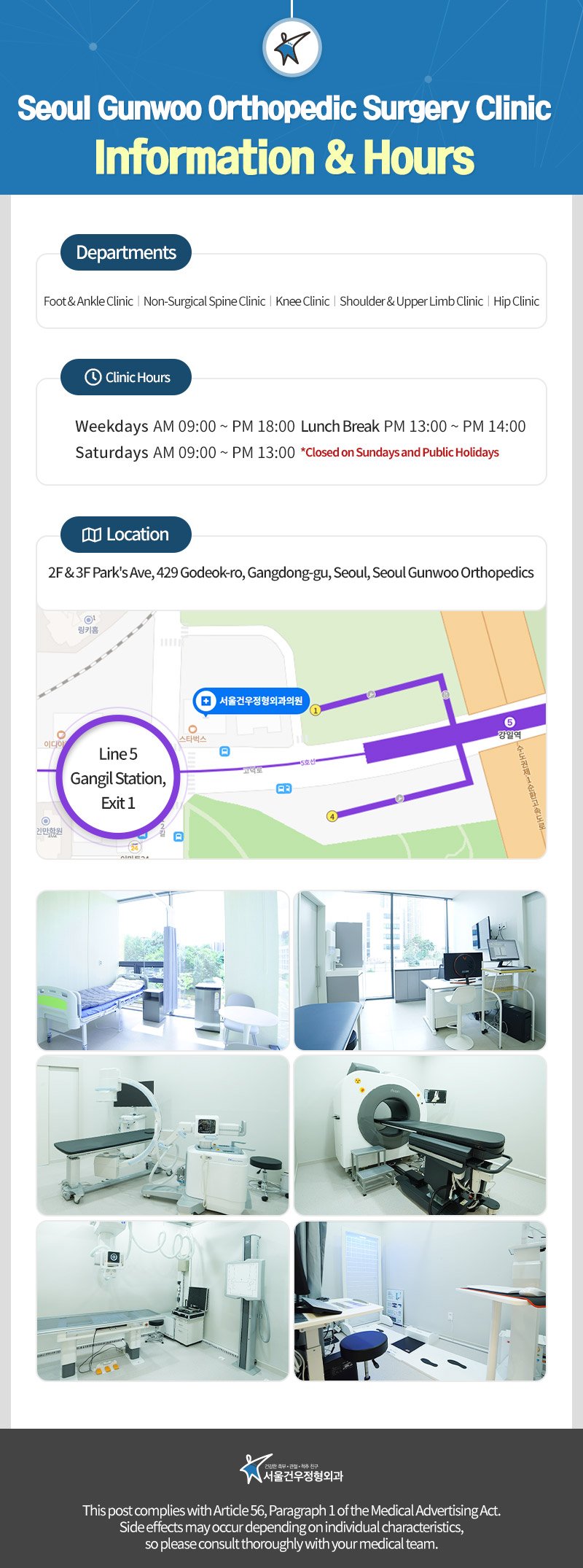
Seoul Gunwoo Orthopedic Surgery Clinic is located at 2F-3F, 429, Godeok-ro, Gangdong-gu, Seoul, Republic of Korea. The clinic’s category is orthopedics, and its listed facilities include diagnostic, surgical, inpatient, and rehabilitation resources in one building. For questions about ankle evaluation, fees, or arranging a visit, contact the clinic by phone. When calling, describe the concern you want assessed and ask what information to bring.
For an appointment or inquiry, call 02-426-9876. Before visiting, it can be helpful to prepare a brief symptom history and any relevant medical records or imaging. If you have questions about a published non-covered fee, refer to the specific service by name so the clinic can clarify whether it relates to your planned evaluation. For treatment decisions, the medical staff will need to assess your situation rather than rely on a general description alone. The clinic’s address is 2F-3F, 429, Godeok-ro, Gangdong-gu, Seoul, Republic of Korea. Use the consultation to clarify both the clinical next step and the practical details of care.
When speaking with the clinic, explain whether your main concern is pain, instability, walking difficulty, or another ankle-related issue. Ask whether you should bring prior records and which fees may apply to any assessment under consideration. The published charges relate to specific services and do not provide a total estimate for surgery. For questions about a proposed treatment plan, request an explanation tailored to your findings. Clear, specific questions can make the conversation more useful.

Frequently Asked Questions
Q.What kind of clinic is Seoul Gunwoo Orthopedic Surgery Clinic?
A.Seoul Gunwoo Orthopedic Surgery Clinic is an orthopedic clinic in Seoul. Its listed facilities include operating rooms, inpatient rooms, CT, ultrasound, gait analysis, and rehabilitation in one building.
Q.Who may want to seek an ankle assessment?
A.People with ankle symptoms that affect movement or daily activities may seek an orthopedic assessment. The appropriate evaluation and care depend on individual symptoms and clinical findings.
Q.What resources are available for ankle evaluation and care?
A.The clinic lists CT, ultrasound, gait analysis, operating rooms, inpatient rooms, and rehabilitation. The medical staff determines which assessments or services are relevant to an individual case.
Q.How much does ankle surgery cost at Seoul Gunwoo Orthopedic Surgery Clinic?
A.A surgery package price is not listed. Published non-covered fees include ankle ultrasound at ₩80,000–140,000 and foot ultrasound at ₩80,000–140,000; these are assessment fees, not surgery costs.
Q.Where is Seoul Gunwoo Orthopedic Surgery Clinic, and how can I contact it?
A.The clinic is at 2F-3F, 429, Godeok-ro, Gangdong-gu, Seoul, Republic of Korea. Call 02-426-9876 for inquiries.
Clinic Information
| Clinic | Seoul Gunwoo Orthopedic Surgery Clinic |
|---|---|
| Specialty | Orthopedics |
| Address | 2F-3F, 429, Godeok-ro, Gangdong-gu, Seoul, Republic of Korea |
| Phone | 02-426-9876 |
| Website | https://seoulfoot.sillajewelry.com |
| Specialist | Specialist care |
 Seoul Gunwoo Orthopedic Surgery Clinic