
What the Best Foot and Ankle Hospital in Seoul Should Offer
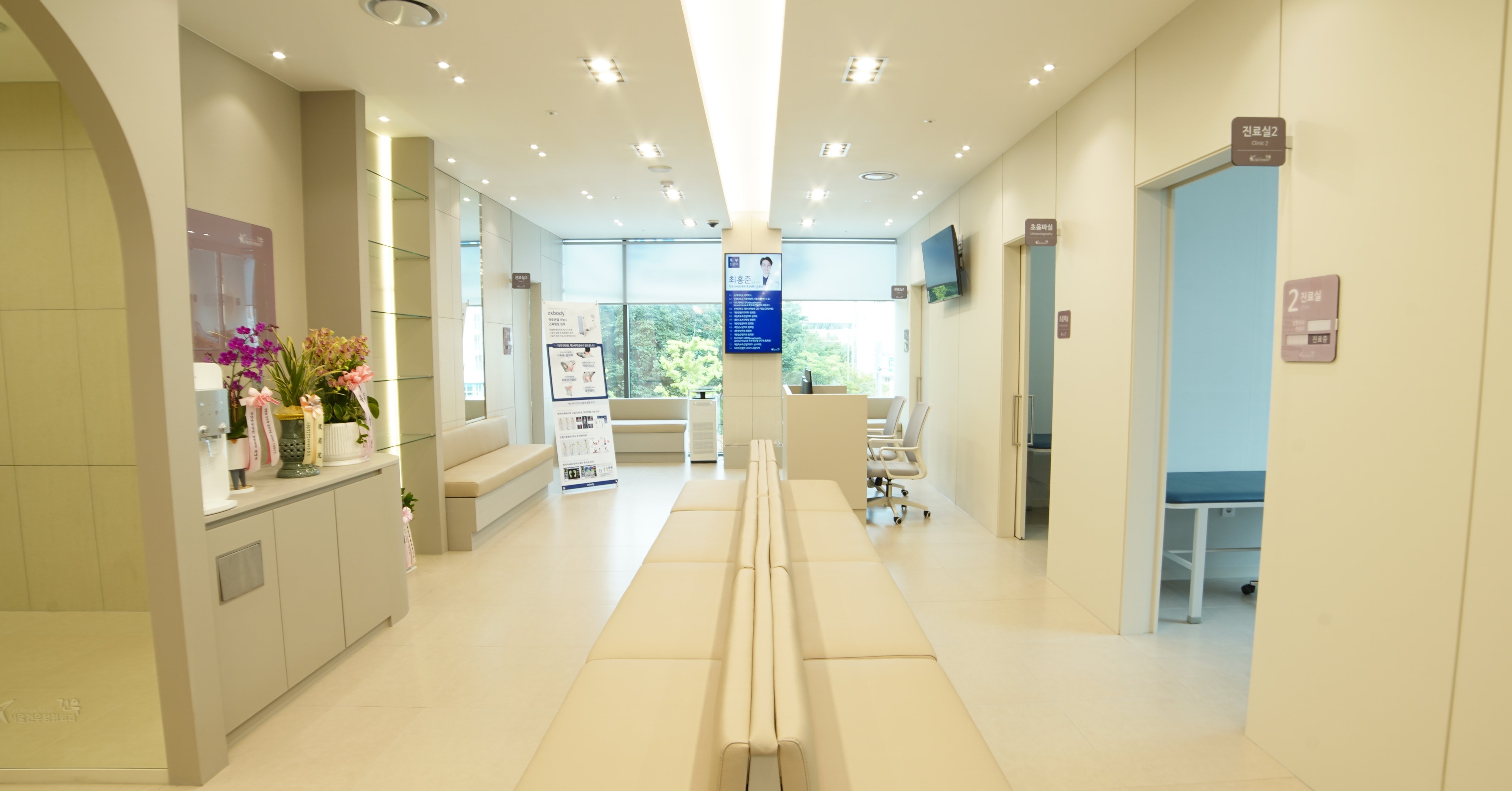
When searching for the best foot and ankle hospital in Seoul, look for care that addresses the specific problem rather than relying on a broad label. Seoul Gunwoo Orthopedic Surgery Clinic is an orthopedics clinic in Gangdong-gu with a published focus on ankle ligament surgery, bunion correction, ankle fractures, Achilles tendon repair, ankle cartilage, and ankle arthritis. Assessment and treatment planning should be based on the condition, symptoms, and examination findings. The clinic brings diagnostic and rehabilitation resources together in one building.
A focused approach to foot and ankle conditions
Foot and ankle symptoms can have different causes, so a useful starting point is to describe where discomfort occurs, when it began, and how it affects movement. Seoul Gunwoo Orthopedic Surgery Clinic’s stated focus includes several common areas of orthopaedic foot and ankle care: ankle ligaments, bunions, fractures, Achilles tendon injuries, cartilage concerns, and ankle arthritis. These are distinct conditions and may call for different assessments and treatment plans. The medical team can evaluate the reported concern and discuss relevant options.
The clinic’s published procedures include MICA minimally invasive bunion surgery, Modified Broström ligament repair, ligament reconstruction, ultrasound-guided Achilles repair, and OATS. It also lists SMO and absorbable screws for bunion and fracture fixation. These procedure names describe different approaches; they are not interchangeable options for every patient. A consultation should establish the diagnosis and whether a procedure is appropriate. Choosing a treatment depends on the individual’s clinical findings, not simply on a procedure being available. Ask what the proposed method is intended to address and what the assessment involves.
Foot and ankle care is most useful when it starts with a clear assessment of the specific condition. The clinic’s published focus covers several distinct concerns, so a treatment plan should be matched to the diagnosis rather than selected by name alone.
Diagnostic and rehabilitation resources in one building
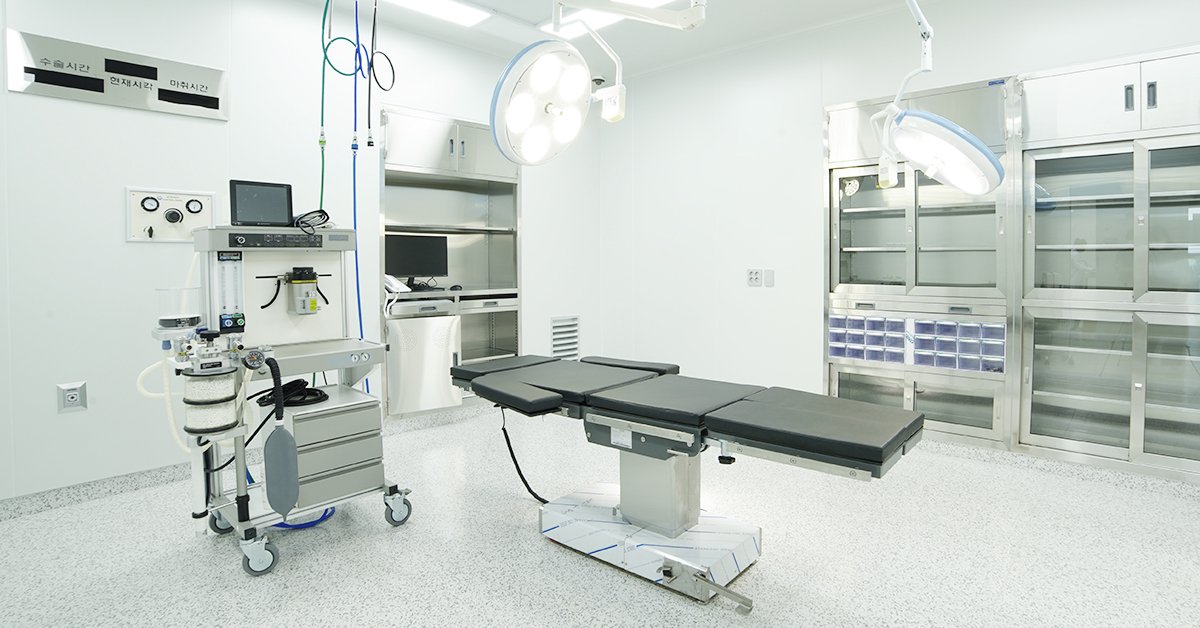
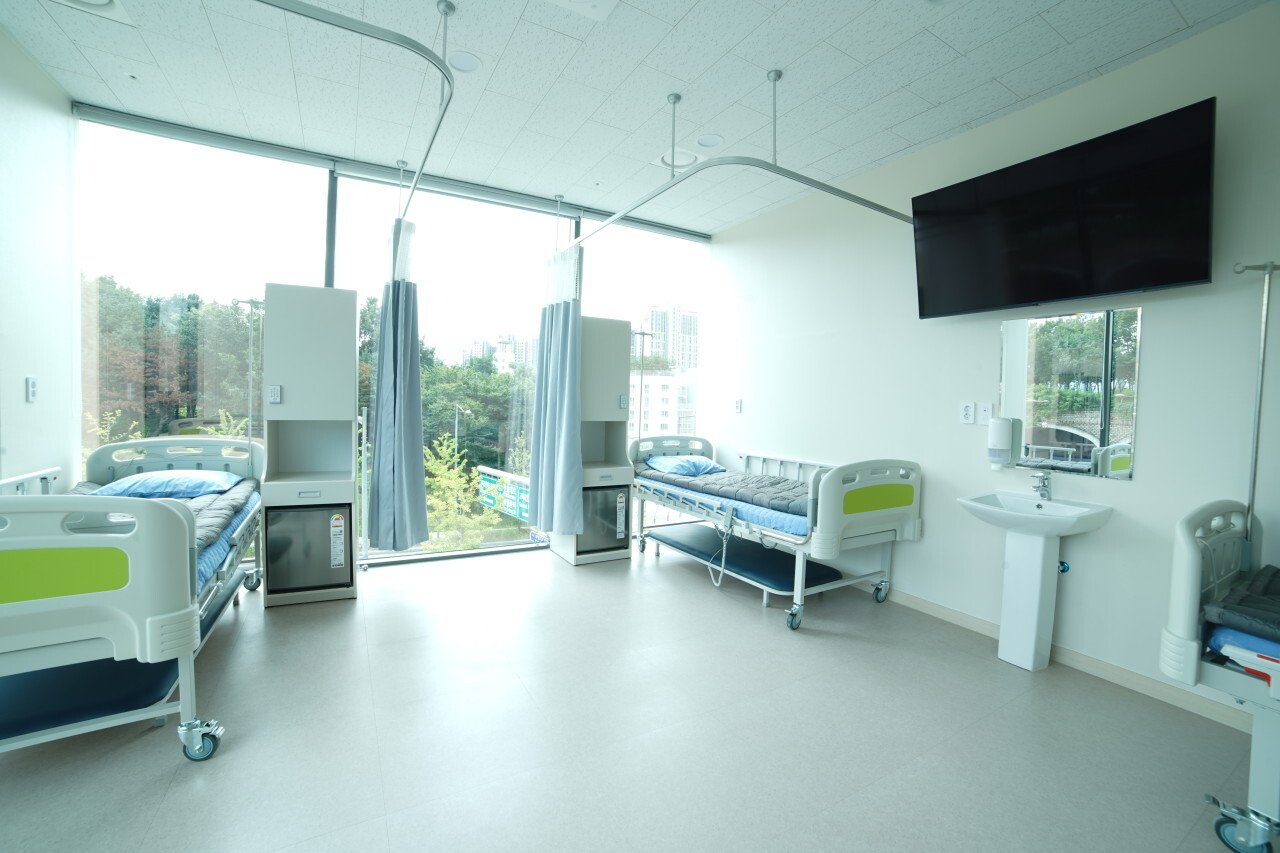
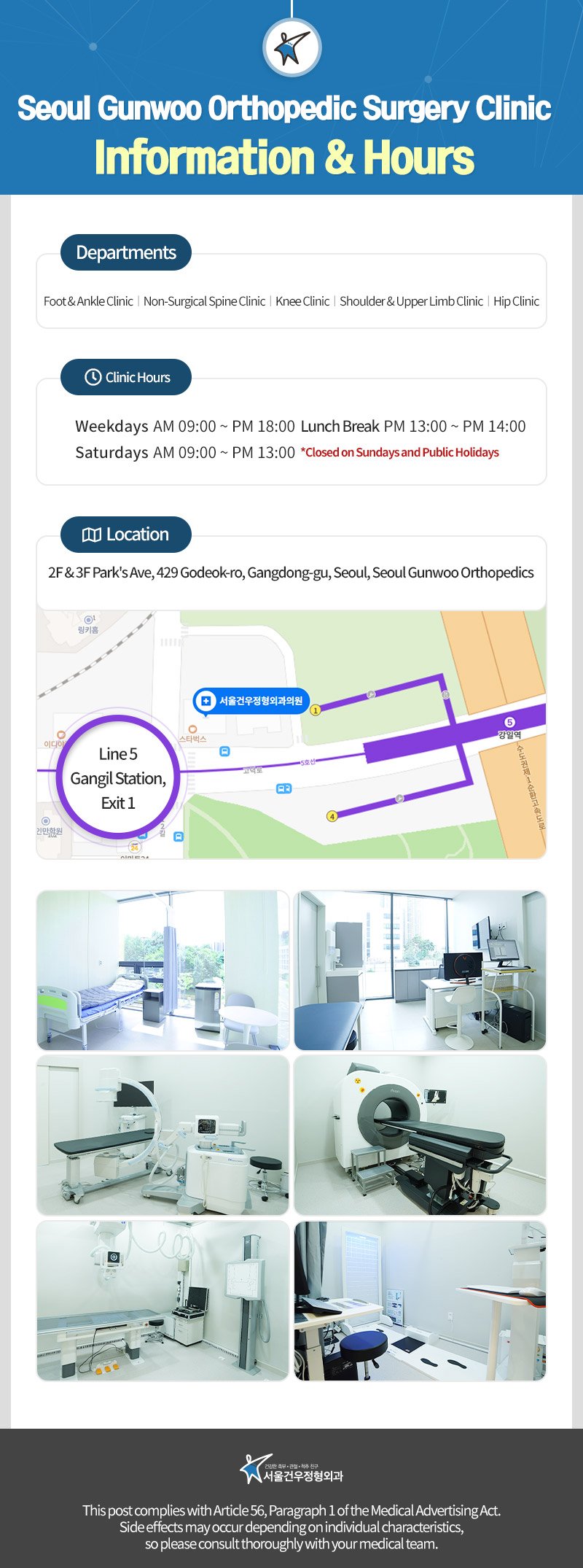
Seoul Gunwoo Orthopedic Surgery Clinic lists CT, ultrasound, and gait analysis among its resources, along with rehabilitation. These tools can contribute different information: imaging helps assess structures, while gait analysis examines movement patterns. Which resources are relevant depends on the concern being evaluated. Having operating rooms, inpatient rooms, diagnostic equipment, and rehabilitation in one building provides an integrated setting for the services the clinic describes. The medical team can explain which assessment tools are relevant to a patient’s case.
It is useful to ask how a proposed assessment connects to the treatment recommendation. For example, a concern involving the ankle ligaments may be approached differently from a bunion or Achilles tendon injury. A consultation can clarify the suspected diagnosis, whether additional assessment is recommended, and how rehabilitation may fit into care. The clinic lists both CT and ultrasound, but that does not mean every patient needs both. Tests and treatment decisions should follow the clinical assessment. Patients can bring prior imaging or records if available and ask how they inform the next steps.
Matching care to the condition
A foot or ankle problem may affect walking, balance, or everyday activity, but symptoms alone do not establish the cause. When contacting the clinic, describe the location of the problem, how it affects movement, and any prior assessment or treatment. This helps focus the consultation. Bring relevant medical records or imaging if you already have them. The clinic’s published areas of care offer a starting point for discussing whether its services correspond to the concern.
Seoul Gunwoo Orthopedic Surgery Clinic is located in Gangdong-gu and identifies itself as a foot-focused orthopaedic clinic serving the area. Its listed clinical focus ranges from bunion correction and ankle ligament procedures to Achilles tendon repair and ankle arthritis. A careful conversation can help distinguish which of these areas, if any, applies to the symptoms. The goal of an initial visit is to understand the condition and discuss suitable next steps—not to assume that surgery is required. Ask the attending medical staff to explain the diagnosis and the reasoning behind the recommended plan.
It can also help to ask how follow-up and rehabilitation relate to the proposed care. The clinic lists rehabilitation in the same building as its diagnostic and inpatient resources. The timing and nature of follow-up depend on the condition and treatment plan, so these details should be discussed directly with the medical team. If you are comparing care options, focus on the clinic’s relevant services, the explanation of your assessment, and how the plan addresses your specific concern. A clear explanation is an important part of making an informed decision.
How the Best Foot and Ankle Hospital in Seoul Approaches Treatment
For people comparing options for the best foot and ankle hospital in Seoul, understanding the treatments offered is more useful than treating a procedure list as a recommendation. Seoul Gunwoo Orthopedic Surgery Clinic lists several surgical techniques for bunions, ankle ligaments, Achilles tendon injuries, cartilage concerns, and fixation. Each has a specific clinical context. The appropriate approach is determined after an assessment by the medical team. Discuss the purpose of a proposed procedure, its alternatives, and the role of rehabilitation before deciding on care.
Procedures listed for bunions and ankle ligaments
For bunion correction, the clinic lists MICA minimally invasive bunion surgery and absorbable screws for bunion fixation. For ankle ligament concerns, its listed techniques include Modified Broström ligament repair and ligament reconstruction. These terms refer to different surgical approaches and should not be treated as equivalent choices. Whether either is relevant depends on an examination and diagnosis. Ask the medical team why a particular procedure is being considered and what it is intended to address. A procedure name alone does not determine suitability or expected recovery.
Bunions and ankle ligament problems involve different structures and can affect movement in different ways. The clinical assessment should identify the concern before a treatment option is discussed. When MICA or a ligament procedure is raised, ask how the findings relate to that approach, what the procedure involves, and what alternatives may be considered. A consultation is also a chance to discuss rehabilitation and follow-up. Seoul Gunwoo Orthopedic Surgery Clinic lists these techniques as part of its foot and ankle services, but the medical team must determine whether one is appropriate for an individual case. Treatment decisions should reflect the patient’s condition and needs.
The clinic lists distinct techniques for bunions and ankle ligament concerns, but a service list is not a personal treatment recommendation. The diagnosis and examination guide which options, if any, are appropriate to discuss.
Care for fractures, Achilles tendon injuries, and cartilage
The clinic’s published focus also includes ankle fracture surgery, Achilles tendon repair, ankle cartilage, and ankle arthritis. Its listed techniques include ultrasound-guided Achilles repair, OATS, and absorbable screws for fracture fixation. These services address different clinical concerns, and not every injury or symptom calls for surgery. An assessment is needed to determine the nature of the problem and the options to consider. Patients can ask how imaging or other evaluation informs the treatment discussion.
When considering care for an ankle fracture or Achilles tendon injury, explain how the problem began and how it affects daily movement. The clinic lists CT and ultrasound among its diagnostic resources, but the appropriate assessment depends on the case. For cartilage concerns, the clinic lists OATS; the medical team can explain whether this procedure is relevant to the diagnosis. Fracture fixation with absorbable screws is also listed, but the use of a particular fixation method depends on clinical judgment. Do not assume that a named technique is suitable without an individual evaluation. Ask what the proposed approach aims to treat and what follow-up or rehabilitation may be involved.
Understanding a proposed treatment plan
Before proceeding with any treatment, ask for a clear explanation of the diagnosis and the reason for the recommended approach. Useful topics include what the procedure involves, whether non-surgical options are relevant, and what role rehabilitation may have. If imaging or gait analysis is recommended, ask how its findings relate to the plan. Informed decisions depend on understanding the purpose of each step. It is reasonable to bring questions and make sure the answers address your specific condition.
Seoul Gunwoo Orthopedic Surgery Clinic lists operating rooms, inpatient rooms, CT, ultrasound, gait analysis, and rehabilitation in one building. These resources support different parts of assessment and care, but their relevance varies by individual case. A patient considering a procedure can ask how care is organized and what follow-up is recommended. The clinic’s published techniques include multiple surgical options across foot and ankle conditions; the medical team can explain which ones are pertinent. Request an explanation in plain language if a procedure or imaging term is unfamiliar. Understanding the plan helps patients take part in decisions about their care.
Questions about recovery, activity, and rehabilitation are best discussed in relation to the specific diagnosis and proposed treatment. The clinic lists rehabilitation as part of its on-site resources, but a patient’s plan depends on the medical assessment. Ask what signs or changes should prompt follow-up and how progress will be reviewed. This conversation is more reliable than assuming one timetable applies to all procedures. Care plans should reflect the condition and the individual’s clinical circumstances.
Planning a Visit to the Best Foot and Ankle Hospital in Seoul
Searching for the best foot and ankle hospital in Seoul can raise practical questions about where to go, what to bring, and how to discuss care. Seoul Gunwoo Orthopedic Surgery Clinic is an orthopedics clinic at 2F-3F, 429, Godeok-ro, Gangdong-gu, Seoul, Republic of Korea, in front of Gangil Station Exit 1. Before visiting, prepare a concise account of your symptoms and any previous assessment. Contact the clinic to arrange a visit and clarify practical details.
Preparing for an orthopaedic consultation
A focused account of your symptoms can make the consultation more useful. Note where the problem occurs, when it started, and how it affects walking or other daily activity. Bring relevant prior records or imaging if you have them. If you are considering a procedure, write down questions about the diagnosis, proposed approach, alternatives, and rehabilitation. Sharing your concerns clearly helps the medical team understand what you want addressed. The clinic’s evaluation can then be directed toward your foot or ankle concern.
It is also helpful to mention previous treatment and whether symptoms have changed over time. If you have imaging or reports from earlier care, bring them so the medical team can consider them during the assessment. You do not need to decide in advance which procedure is right for you; the clinic lists techniques for different conditions, and their relevance depends on the diagnosis. Ask the attending medical staff to explain any unfamiliar terms and the purpose of recommended tests. A consultation should clarify the problem and the possible next steps, rather than require you to choose a procedure before the assessment. Keep your questions practical and specific to your circumstances.
A little preparation can help keep a foot and ankle consultation focused on your symptoms and priorities. Bring relevant records, describe how the problem affects you, and ask for a clear explanation of the assessment and recommended next steps.
Access and contacting the clinic
Seoul Gunwoo Orthopedic Surgery Clinic is at 2F-3F, 429, Godeok-ro, Gangdong-gu, Seoul, Republic of Korea, in front of Gangil Station Exit 1. The clinic can be reached by phone at 02-426-9876. Before travelling, contact the clinic to arrange your visit and ask any practical questions about consultation. Having your symptom summary and relevant records ready can help you make good use of the appointment.
The clinic’s facilities include operating rooms, inpatient rooms, CT, ultrasound, gait analysis, and rehabilitation in one building. These resources relate to different aspects of assessment and care, so their use depends on the patient’s needs. When contacting the clinic, briefly describe whether your concern involves a bunion, ankle instability, fracture, Achilles tendon, cartilage, or another foot and ankle issue. This can help direct your enquiry. Only the medical assessment can establish which services or procedures are relevant. Ask how to prepare for the appointment and whether to bring existing records or imaging.
Discussing costs and next steps
The clinic’s treatment options vary according to the condition and assessment, so a cost should be discussed in relation to the specific care being considered. Contact Seoul Gunwoo Orthopedic Surgery Clinic to ask about pricing for the recommended service after consultation. Do not assume that one procedure’s cost applies to another; the plan must first be matched to the diagnosis. Asking for an explanation of expected steps can help you understand what the recommendation involves.
After assessment, ask what the next step is and whether further evaluation, a procedure, or rehabilitation is being recommended. The clinic lists rehabilitation alongside its foot and ankle services, but the appropriate plan depends on the individual case. If you are comparing options, make sure you understand the proposed diagnosis and why the care plan addresses it. You can contact the clinic at 02-426-9876 for consultation arrangements. Clear information about the recommendation and its practical steps supports an informed decision.
For your appointment, prepare a short timeline of the concern, note any effect on daily activity, and bring relevant records if available. Make a list of questions about diagnosis, treatment options, rehabilitation, and cost. The clinic is located in front of Gangil Station Exit 1, and its published address is 2F-3F, 429, Godeok-ro, Gangdong-gu, Seoul, Republic of Korea. Call ahead to arrange the visit and confirm practical details. This preparation keeps the discussion centered on your needs and the care options relevant to your assessment.
Frequently Asked Questions
Q.What kind of clinic is Seoul Gunwoo Orthopedic Surgery Clinic?
A.Seoul Gunwoo Orthopedic Surgery Clinic is an orthopedics clinic in Gangdong-gu, Seoul, with a published focus on foot and ankle care. Its areas of focus include ankle ligaments, bunions, ankle fractures, Achilles tendon repair, cartilage, and ankle arthritis.
Q.Who may want to consult Seoul Gunwoo Orthopedic Surgery Clinic?
A.People seeking orthopaedic assessment for a foot or ankle concern such as a bunion, ankle ligament problem, fracture, Achilles tendon injury, cartilage concern, or ankle arthritis may contact the clinic. The medical team determines the relevant care after assessment.
Q.What foot and ankle procedures does Seoul Gunwoo Orthopedic Surgery Clinic list?
A.Listed techniques include MICA minimally invasive bunion surgery, Modified Broström ligament repair, ligament reconstruction, ultrasound-guided Achilles repair, OATS, SMO, and absorbable screws for bunion and fracture fixation. The appropriate option depends on the diagnosis and clinical assessment.
Q.How can I prepare for a consultation, and how are costs discussed?
A.Bring relevant medical records or imaging, and prepare a brief description of your symptoms and questions. Discuss the cost in relation to the specific service recommended after assessment.
Q.Where is Seoul Gunwoo Orthopedic Surgery Clinic, and how can I contact it?
A.The clinic is at 2F-3F, 429, Godeok-ro, Gangdong-gu, Seoul, Republic of Korea, in front of Gangil Station Exit 1. Call 02-426-9876 to arrange a visit.
Clinic Information
| Clinic | Seoul Gunwoo Orthopedic Surgery Clinic |
|---|---|
| Specialty | Orthopedics |
| Address | 2F-3F, 429, Godeok-ro, Gangdong-gu, Seoul, Republic of Korea |
| Phone | 02-426-9876 |
| Website | https://seoulfoot.sillajewelry.com |
| Specialist | Specialist care |
 Seoul Gunwoo Orthopedic Surgery Clinic