

Understanding Care at a Bunion Surgery Hospital in Seoul
A bunion is a change in the alignment of the big toe joint that can cause a prominent bump on the side of the foot. Pain, pressure from footwear, and difficulty with daily activities are common reasons to seek advice. Seoul Gunwoo Orthopedic Surgery Clinic provides bunion care as part of its orthopedic services, and its published surgical work includes bunion surgery. A consultation is an opportunity to discuss both the symptoms that affect you and the treatment options that may address them. Surgery is not necessarily the first step for every person with a bunion.
When a Bunion Deserves Attention
A visible bump does not tell the whole story. Some people notice discomfort primarily when wearing shoes, while others experience pain during walking or other activities. The big toe may also point toward the neighboring toes. If symptoms are persistent or interfere with your routine, an orthopedic consultation can help you understand what is contributing to the discomfort. Describe how the foot feels and functions, rather than focusing only on how the bump looks. This gives the attending doctor useful context for discussing care.
Before your appointment, consider when you first noticed the problem and whether it has changed over time. Note where the discomfort occurs, which shoes aggravate it, and whether rest or a change of footwear makes a difference. If you have tried padding, inserts, or other measures, be ready to explain whether each one helped. Previous foot injuries and other health conditions can also be relevant to the discussion. These details do not replace an examination, but they can help the medical staff understand your concerns. Ask what findings matter for your situation and whether any further assessment is appropriate. A clear explanation of the problem is also a useful starting point for deciding whether to continue with nonsurgical care or discuss an operation.
A bunion should be considered in the context of pain, footwear, and everyday function—not appearance alone. A clear account of your symptoms helps guide a more useful treatment discussion.
What a Consultation Can Help Clarify
At Seoul Gunwoo Orthopedic Surgery Clinic, bunion care falls within a broader focus on orthopedic problems. A consultation gives you the chance to discuss the location and pattern of your symptoms and ask how the alignment of the toe relates to them. The attending doctor can explain which aspects of your condition warrant attention and what options are appropriate to consider. Ask for an explanation of the findings before deciding on treatment. Understanding the reason for a recommendation makes it easier to weigh its implications.
Useful questions include whether your symptoms appear to come from the bunion, what nonsurgical measures are worth considering, and what circumstances would make surgery a reasonable discussion. You can also ask how your health, work, and activity level might affect the treatment plan. An examination or imaging may be used when clinically appropriate, but the need for either depends on the individual assessment. If surgery is discussed, ask what the proposed operation is intended to correct and what limitations or risks are relevant to you. Take notes or bring a list of questions if you find medical appointments difficult to navigate. You should leave with a clearer understanding of the next step, whether that is a change in daily care, further assessment, or a more detailed surgical conversation.
Considering Foot and Ankle Care Together
Foot discomfort can affect more than one area, so it is useful to mention symptoms beyond the big toe. Seoul Gunwoo Orthopedic Surgery Clinic also provides care for ankle ligaments, the Achilles tendon, heel pain, and plantar fasciitis. Its published surgical work covers ankle ligament repair and reconstruction, Achilles tendon repair, ankle cartilage, ankle arthritis, and fractures. These areas of care are distinct from bunion treatment; mentioning them does not mean another condition is responsible for your symptoms. The purpose is to give the medical staff a complete account of your concerns.
For example, tell the attending doctor if ankle discomfort changes how you walk or if heel pain is part of your daily experience. Avoid assuming that every symptom has the same cause. Instead, ask which concerns should be assessed together and which may need a separate discussion. This approach can help keep the consultation focused without overlooking information that matters to your activity and footwear choices.
| Concern | Information to share at a visit |
|---|---|
| Big toe discomfort | Where it hurts and which activities or shoes make it worse |
| Footwear pressure | Which shoes are uncomfortable and whether a wider toe area helps |
| Other foot or ankle symptoms | Any heel, ankle, or Achilles tendon discomfort you have noticed |
| Previous care | Measures you have tried and how your symptoms responded |
The table is a preparation aid, not a diagnostic checklist. You do not need to have every detail worked out before seeking advice. If you are unsure how to describe a symptom, explain when you notice it and what you were doing at the time. Bringing the shoes that cause difficulty, or describing their fit, can also make the discussion more concrete. The attending doctor can then help identify which details are most relevant to your assessment.

Comparing Treatment Options at a Bunion Surgery Hospital in Seoul
Treatment decisions should reflect symptoms, examination findings, and the effect of the bunion on daily life. Some people discuss adjustments to footwear or other nonsurgical measures first; others may want to discuss surgery because discomfort continues or function is affected. The presence of a bunion alone does not establish that an operation is necessary. Seoul Gunwoo Orthopedic Surgery Clinic provides bunion care, and its published surgical work includes bunions. Ask the attending doctor to explain the options relevant to your individual circumstances.
Nonsurgical Measures and Their Purpose
Nonsurgical care is generally intended to manage symptoms and reduce pressure on the affected area. Depending on the person, a discussion may include shoes with sufficient room around the toes, protective padding, or other support. These measures should not be confused with an operation to correct bone alignment. If you have already changed footwear or tried a support, explain what you used and whether it helped. That information can make the next treatment discussion more specific and help the attending doctor understand what remains difficult.
Consider the practical demands of your routine when reviewing nonsurgical options. Shoes that feel comfortable at home may not suit the hours you spend standing, walking, or working. Likewise, a measure that reduces pressure in one pair of shoes may not work as well in another. Ask how to use any recommended support and what changes would justify a follow-up discussion. You can also ask how to monitor discomfort and activity tolerance without treating a temporary change as a definitive outcome. If symptoms continue despite measures you have tried, describe that history rather than simply saying that treatment did not work. The type of measure, how consistently you used it, and the activities during which discomfort persisted are all useful context for a conversation about what to do next.
Nonsurgical measures focus on managing discomfort and pressure; they are different from surgical correction. The right discussion begins with what you have tried and how your symptoms affect daily life.
When to Discuss Surgery
A surgical conversation can be appropriate when a bunion causes ongoing symptoms or interferes with activities, particularly if nonsurgical measures have not provided enough relief. Whether an operation is suitable depends on an individual assessment, not on the appearance of the foot alone. Ask the attending doctor what the proposed treatment aims to address and how the recommendation relates to your symptoms. Discussing surgery does not commit you to having it; it gives you a chance to understand the reasoning and alternatives.
Bunion operations can involve different approaches to correcting the position of the big toe and the structures around the joint. The appropriate approach depends on the clinical findings and the surgeon’s assessment. If an operation is recommended, ask which approach is being proposed for you, why it is appropriate, and what alternatives should be considered. Discuss the expected course of recovery, including how the plan may affect walking, footwear, work, and other responsibilities. It is also reasonable to ask what follow-up care is anticipated and which symptoms after surgery should prompt a call to the medical staff. A useful decision is an informed one: ask until you understand the purpose of the procedure and the commitments involved. The attending doctor can explain the details that apply to your condition.
Points to Consider Before Treatment
Any decision about surgery should include a discussion of potential complications and recovery. Risks depend on the procedure and the individual, and the attending doctor can explain which concerns are relevant to you. It is also important to understand that healing and changes in comfort may take time depending on your condition. Ask how your existing health conditions, medications, and daily responsibilities might affect preparation or recovery. Do not stop prescribed medication or change your treatment routine without advice from the clinician responsible for your care.
Practical planning matters as much as understanding the operation itself. Ask what support you may need at home, how to manage work or travel, and when you should seek advice during recovery. If you have questions about cost, request an explanation of the charges associated with your proposed care before making a decision. Costs depend on the individual treatment plan. Clear answers about the procedure, follow-up, and financial arrangements can help you decide whether you are ready to proceed.
It can be helpful to revisit your priorities before the appointment ends. Explain which activities you most want to discuss, whether that is wearing particular shoes, walking comfortably, or managing time away from work. Ask the attending doctor how the proposed plan relates to those priorities and what uncertainty remains. A treatment recommendation should be understood as an individualized clinical decision, not a promise of a particular result. If anything is unclear, request a further explanation before agreeing to treatment.

Planning Your Visit to a Bunion Surgery Hospital in Seoul
A well-prepared visit can make it easier to use consultation time productively. Seoul Gunwoo Orthopedic Surgery Clinic offers orthopedic care for bunions and other foot and ankle concerns. Before visiting, organize the details of your symptoms, the measures you have tried, and the questions you want answered. You can also review the clinic’s consultation hours when planning your schedule. Bring information that helps the medical staff understand both your symptoms and the practical demands of your daily life.
Preparing for Your Appointment
Start with a short account of the problem: where the discomfort is, when it occurs, and how it affects walking or footwear. List any relevant previous treatment and whether it made a difference. If you have medical records or images related to the concern, ask whether you should bring them. A current medication list and details of relevant health conditions can also support the discussion. These preparations help you describe your situation accurately without having to remember every detail during the visit.
Write down your most important questions in advance. You might ask what is causing the discomfort, which treatment options are appropriate, and what each option is intended to achieve. If surgery is a possibility, add questions about the proposed procedure, recovery, follow-up, and costs. Consider any constraints that could affect your decision, such as work duties or responsibilities at home, and mention them to the attending doctor. If more than one foot or ankle concern is troubling you, identify which issue is most pressing and explain how the symptoms relate to your routine. This gives the medical staff a clearer basis for prioritizing the conversation. You can also take notes on the recommendations and ask for clarification if a term or instruction is unfamiliar.
Preparation is straightforward: describe the symptoms, bring relevant health information, and identify your main questions. The goal is a clear discussion of options that fits your circumstances.
Reviewing the Medical Staff’s Background
When choosing care, it is reasonable to look at the medical staff’s background alongside the services offered. Dr. Choi Hong Joon has a background in foot and ankle medicine, clinical practice, and research, and holds a PhD in medicine. Dr. Min Kyong Dae’s profile lists orthopedic specialist training, as well as arthroscopy and sports-medicine training and research experience. These details provide context for the clinic’s orthopedic work; your own consultation remains the place to discuss who will provide your care and how the proposed plan applies to you.
Credentials are one part of a decision, but the consultation itself should also help you assess whether your questions have been addressed. Ask the attending doctor to explain the findings in terms you understand and to describe the reasoning behind any recommendation. If surgery is discussed, you can ask who would perform the procedure and how follow-up would be organized. You may also want to know how the treatment plan accounts for other foot or ankle symptoms. There is no need to judge a consultation by a single phrase or title. Look instead for a clear explanation of your condition, a discussion of relevant alternatives, and an opportunity to consider the practical implications before making a decision.
Hours and Contact Planning
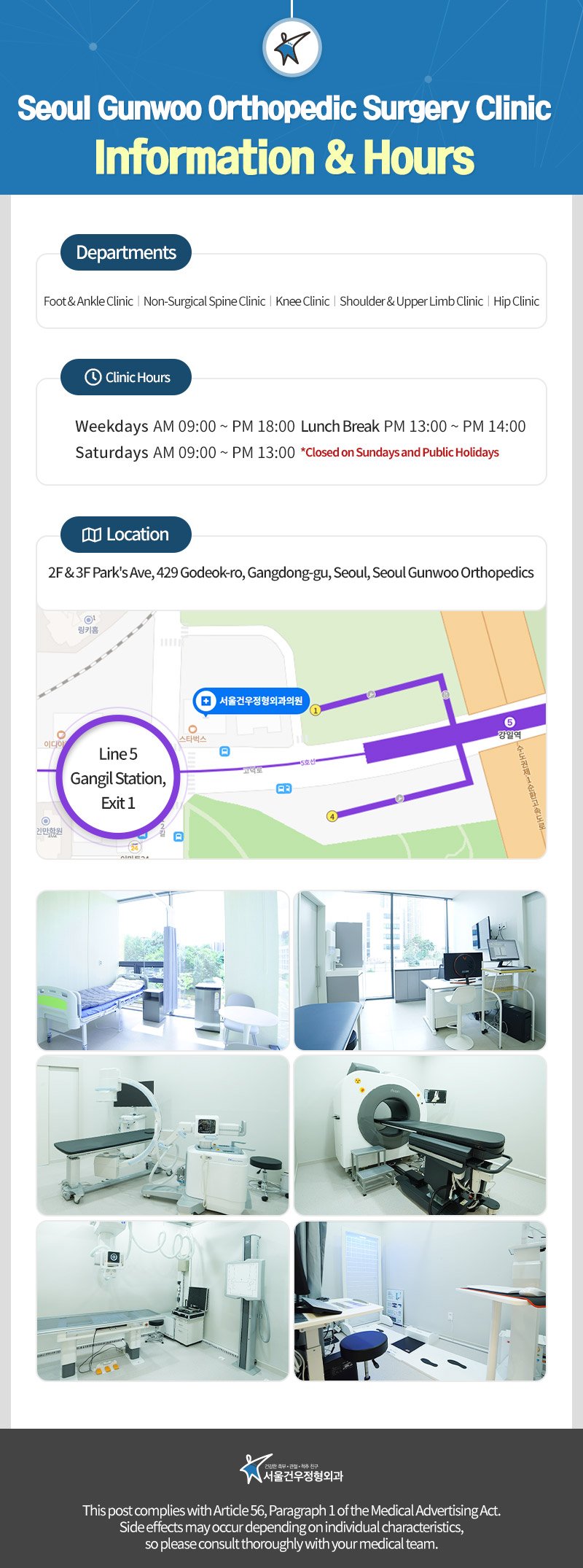
Seoul Gunwoo Orthopedic Surgery Clinic holds consultations on weekdays and Saturdays. Weekday hours include a lunch break, and the clinic is closed on Sundays and public holidays. All times are in Korea Standard Time. When arranging your visit, allow time to discuss your concerns and any questions about the next step in care. Calling ahead can help you discuss appointment arrangements before traveling.
| Day | Consultation hours |
|---|---|
| Monday–Friday | 9:00 a.m.–6:00 p.m.; lunch break 1:00–2:00 p.m. |
| Saturday | 9:00 a.m.–1:00 p.m. |
| Sunday and public holidays | Closed |
Seoul Gunwoo Orthopedic Surgery Clinic is near Gangil Station, Exit 1. If you are traveling for a consultation, consider how your foot feels during longer walks and choose footwear that is comfortable for the journey. Bring your questions and any relevant information you have gathered about prior care. If your schedule is constrained, mention that when discussing treatment so the attending doctor can address the practical considerations that matter to you.
After the visit, review the plan and make sure you understand any recommended next steps. If you are considering surgery, take time to weigh the explanation of the procedure, recovery, and alternatives against your own needs. If you continue with nonsurgical care, note what you have agreed to try and when you should seek further advice. Keeping the discussion grounded in your symptoms and goals can help you make a considered decision.

Frequently Asked Questions
Q.What kind of care does Seoul Gunwoo Orthopedic Surgery Clinic offer?
A.Seoul Gunwoo Orthopedic Surgery Clinic provides orthopedic care, including bunion care and care for ankle ligaments, the Achilles tendon, heel pain, and plantar fasciitis. Its published surgical work includes bunion surgery.
Q.Who might consider a consultation for a bunion?
A.A consultation may be useful if a bunion causes discomfort, pressure from shoes, or difficulty with daily activities. The attending doctor can discuss the symptoms and the options appropriate to the individual.
Q.Does Seoul Gunwoo Orthopedic Surgery Clinic treat concerns beyond bunions?
A.Yes. The clinic provides care for ankle ligament and Achilles tendon concerns, as well as heel pain and plantar fasciitis. Its published surgical work also covers ankle ligament repair and reconstruction, Achilles tendon repair, ankle cartilage, ankle arthritis, and fractures.
Q.What should I prepare before a bunion consultation?
A.Note when the discomfort occurs, which shoes or activities aggravate it, and what measures you have already tried. Bring a list of questions about treatment and recovery.
Q.Where is Seoul Gunwoo Orthopedic Surgery Clinic, and how can I contact it?
A.The clinic is at 2F–3F, 429 Godeok-ro, Gangdong-gu, Seoul, Republic of Korea, near Gangil Station, Exit 1. Call 02-426-9876 to discuss a visit.
Clinic Information
| Clinic | Seoul Gunwoo Orthopedic Surgery Clinic |
|---|---|
| Specialty | Orthopedics |
| Address | 2F-3F, 429, Godeok-ro, Gangdong-gu, Seoul, Republic of Korea |
| Phone | 02-426-9876 |
| Website | https://seoulfoot.sillajewelry.com |
| Specialist | Specialist care |
 Seoul Gunwoo Orthopedic Surgery Clinic