

Hallux valgus surgery reviews Seoul: Understanding Your Options
When reading hallux valgus surgery reviews Seoul search results, focus on the information that helps you make a treatment decision rather than on another patient’s outcome alone. A bunion is a change in the alignment of the big toe that can create a prominent area at the side of the foot. Symptoms, footwear needs and activity levels differ from person to person. Whether surgery is appropriate depends on an assessment of your symptoms and foot, not simply on the appearance of a bunion.
When a bunion deserves attention
A bunion may become noticeable because the big toe angles toward the other toes or because a prominent area develops near its base. Some people seek care when shoes press against that area; others are concerned about pain during walking or everyday activities. The appearance of a bunion does not necessarily indicate how much discomfort a person experiences. An appointment provides an opportunity to explain what has changed, where the foot hurts and which activities have become difficult.
Before a visit, consider how symptoms affect your routine. Note whether discomfort appears only in certain shoes, follows a long period of standing or interferes with walking. It is also useful to mention any previous foot or ankle treatment and whether the discomfort has changed over time. This information can help you have a more focused discussion with the medical staff. Describe the activities you want to return to as well as the symptoms you want to address. That distinction matters because treatment decisions should reflect your circumstances, not just a comparison with photographs or reviews.
A bunion can look similar from one person to another while causing a different level of discomfort. Start with your symptoms and daily needs, then discuss which approach is appropriate for you.
Care without surgery
Not every person with a bunion needs an operation. Depending on the assessment, a discussion may include ways to reduce pressure on the painful area, such as choosing footwear with enough room around the toes. The aim is to address discomfort and support everyday activity; these measures should not be presented as a guaranteed correction of the toe’s alignment. Ask the attending doctor which options make sense for your foot and how to judge whether they are helping.
If you have already changed your footwear or tried other measures, explain what you used and how your symptoms responded. Be specific about whether an approach helped with walking, standing or wearing particular shoes. It is also reasonable to ask what to do if discomfort continues and when a further assessment would be useful. Seoul Gunwoo Orthopedic Surgery Clinic offers bunion care, so a consultation can be a starting point for discussing your concerns and the options relevant to your condition. A useful treatment plan begins with a clear understanding of the problem you are trying to solve.
When to discuss surgery
Surgery may be worth discussing when bunion symptoms continue to interfere with daily life. The decision is not based on a review score or a single description of pain. The attending doctor can consider your symptoms, examine your foot and explain whether an operation is an appropriate option. Ask what the proposed operation is intended to address and how that goal relates to your own concerns about walking, footwear or discomfort.
If surgery is discussed, ask about the proposed approach, its potential benefits and its risks. Questions about anesthesia, postoperative support, activity restrictions and follow-up can help you understand what treatment would involve. Recovery and the time needed to notice changes depend on the individual and the procedure. An informed decision includes both the expected goals of treatment and the practical commitments of recovery.
Seoul Gunwoo Orthopedic Surgery Clinic has published surgical work covering bunions. That is relevant when exploring surgical care, but the published scope does not determine which treatment you personally need. Bring your questions to the appointment and ask the medical staff to explain the reasoning behind any recommendation. If you are uncertain, take time to review the proposed plan before deciding how to proceed.

Hallux valgus surgery reviews Seoul: How to Assess a Clinic
Reviews can reveal what patients chose to share about their visits, but they cannot establish whether a particular treatment will suit you. Read them alongside information about the clinic’s field of care and the consultation process. Seoul Gunwoo Orthopedic Surgery Clinic provides orthopedic care, including bunion care and care for other foot and ankle concerns. Use reviews to develop questions, then rely on an individual assessment to discuss your own treatment options.
Look beyond an overall rating
A useful review explains the circumstances behind the writer’s experience. Look for details about the concern that brought the person to the clinic, the questions discussed and the stage of care being described. A comment about an initial appointment, for example, does not explain what postoperative follow-up was like. Likewise, a positive or negative account of recovery reflects one person’s experience and should not be treated as a prediction of your own.
Pay attention to whether a review distinguishes between the consultation, treatment and recovery. These are different parts of care, and each can raise different questions. You might want to know how a proposed plan was explained, what the patient understood about activity restrictions or how follow-up was discussed. Reviews may help you identify topics to bring up, but they cannot verify your diagnosis or tell you which operation, if any, is suitable. When a review makes a broad claim about outcomes, treat it cautiously and ask the attending doctor about the potential benefits and risks in your specific case.
Reviews are most useful when they help you ask better questions. They are not a substitute for an examination or an explanation tailored to your foot.
Consider the relevant clinical background
Seoul Gunwoo Orthopedic Surgery Clinic offers care for bunions, ankle ligament concerns, Achilles tendon concerns, heel pain and plantar fasciitis. The clinic’s published surgical work also covers ankle ligament repair and reconstruction, Achilles tendon repair, ankle cartilage, ankle arthritis and fractures. This scope is useful context if you have questions about more than one part of the foot or ankle. It does not mean that every concern requires surgery.
Dr. Choi Hong Joon has a background in foot and ankle medicine, clinical practice and research, and holds a PhD in Medicine. Dr. Min Kyong Dae is an orthopedic specialist whose listed training includes arthroscopy and sports medicine. When arranging a consultation, focus on whether the care offered addresses your concern and whether you can understand the proposed plan. You can ask who will assess you, what the assessment involves and how the medical staff will explain treatment choices. Those questions are more useful than assuming that another patient’s experience will match your own.
Check practical details before your visit
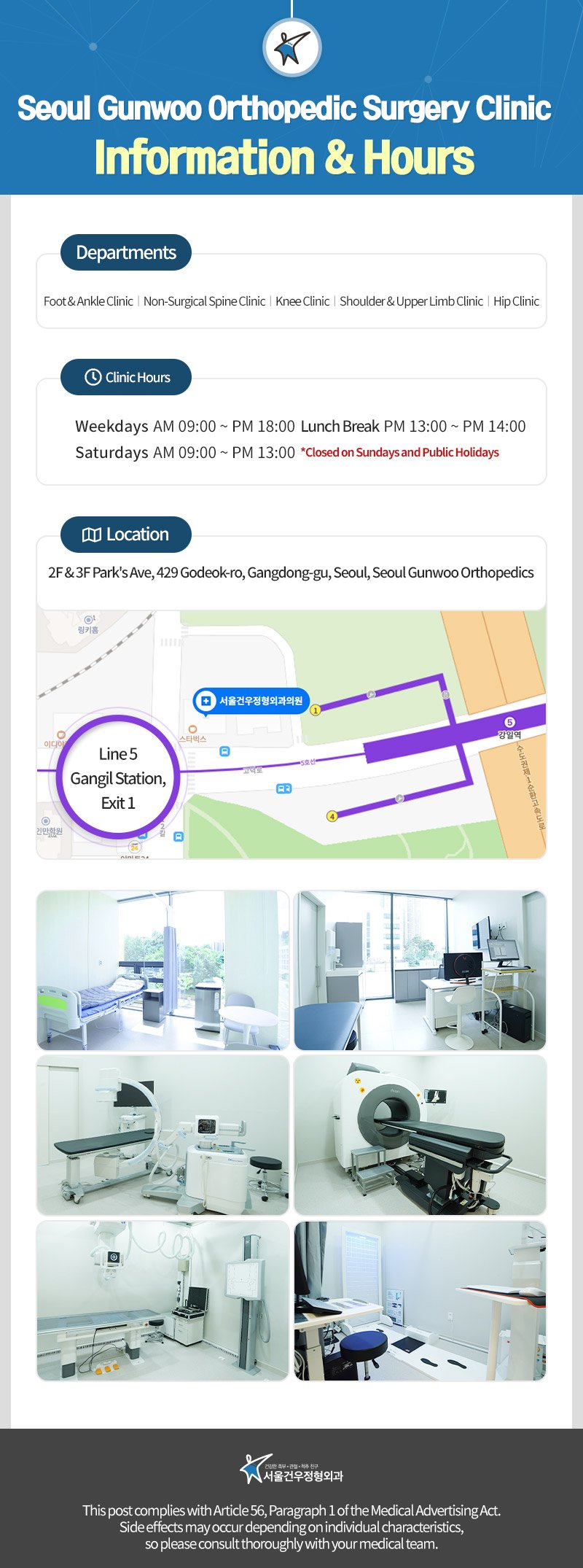
Location and consultation hours matter when planning an assessment and any subsequent visits. Seoul Gunwoo Orthopedic Surgery Clinic is near Gangil Station, Exit 1. The schedule below is in Korea Standard Time and includes the weekday lunch break. Allow for the possibility that your care plan may involve more than an initial conversation, and discuss any follow-up arrangements with the medical staff if treatment is recommended.
Contact our clinic before booking to ask about language support or interpretation. An English-language website alone does not establish that an English-speaking clinician or interpreter will be available at your appointment. If you need assistance communicating, arranging it in advance can help you describe symptoms accurately and understand the treatment discussion. You may also want to prepare your questions in writing so that important points are not overlooked.
| Visit detail | Information |
|---|---|
| Monday to Friday | 9:00 a.m. to 6:00 p.m. |
| Weekday lunch break | 1:00 p.m. to 2:00 p.m. |
| Saturday | 9:00 a.m. to 1:00 p.m. |
| Sunday and public holidays | Closed |
| Nearby station | Gangil Station, Exit 1 |
When considering travel, think about the journey after an appointment as well as the journey there. If an operation is proposed, ask what assistance or transport arrangements you should consider afterward. The answer depends on the treatment plan and your circumstances. Planning these details in advance can make it easier to assess whether the proposed schedule and recovery commitments fit your everyday responsibilities.

Hallux valgus surgery reviews Seoul: Preparing for a Consultation
A productive consultation starts with a clear account of your symptoms and a practical set of questions. Bring relevant information about previous care, the shoes or activities that aggravate discomfort and any concerns about treatment. If surgery is an option, ask how the proposed plan addresses your symptoms and what recovery may involve. You should understand the purpose of a recommendation before deciding whether to proceed.
Explain how symptoms affect daily life
Describe where you feel discomfort and what tends to bring it on. For example, explain whether a shoe presses on the side of your foot or whether walking and standing have become more difficult. If your symptoms change with activity or footwear, mention that too. These details give the attending doctor a clearer picture than a description of the bunion’s appearance alone.
It can help to make a short list before the appointment. Include the activities you have reduced or stopped, any footwear changes you have made and the questions that matter most to you. If you have relevant records from previous assessment or treatment, consider bringing them. Tell the medical staff about other foot or ankle symptoms as well, rather than assuming they are connected to the bunion. A clear account allows the consultation to focus on what needs to be assessed and what you hope to achieve through care.
Your experience of pain and activity limitations is an important part of the conversation. A concise symptom history helps the medical staff discuss options that are relevant to your situation.
Ask about the proposed treatment plan
If an operation is recommended, ask the attending doctor to explain why it is being considered and what it is intended to address. You can also ask about alternatives, the type of anesthesia, potential complications and the expected follow-up. These questions are not a checklist that guarantees an outcome; they are a way to understand the decision and participate in it.
Recovery planning deserves its own discussion. Ask when you may be able to return to work, drive, exercise and wear your usual shoes, and whether you will need help at home. The answers depend on your procedure and individual condition, so avoid relying on another patient’s timeline. Ask what changes you should report during recovery and how follow-up appointments will be arranged. Changes may take time depending on individual condition. Understanding that uncertainty before treatment can help you make realistic plans without assuming that any particular result is assured.
Discuss costs and next steps
If you are considering surgery, ask for an explanation of the expected charges for your proposed care. Discuss what the estimate covers, including the operation, anesthesia, follow-up and any other relevant aspects of treatment. Costs depend on the assessment and treatment plan, so an individual discussion is more useful than an unrelated figure found in a review.
Before leaving, make sure you understand the next step. You may need time to consider the options, arrange support or prepare further questions. If the medical staff recommends treatment, ask for an explanation of what preparation is needed and whom to contact if your circumstances change. A clear plan should connect the recommendation to your symptoms and explain the practical steps ahead.
Seoul Gunwoo Orthopedic Surgery Clinic offers bunion care within its orthopedic practice. Whether you are seeking an initial assessment or discussing surgery, use the appointment to clarify your goals, the proposed care and the expected follow-up. Reviews can provide context, but your decision should rest on a conversation about your own foot and the treatment options appropriate to you.

Frequently Asked Questions
Q.What kind of care does Seoul Gunwoo Orthopedic Surgery Clinic offer?
A.Seoul Gunwoo Orthopedic Surgery Clinic provides orthopedic care, including bunion, ankle ligament, Achilles tendon, heel pain and plantar fasciitis care.
Q.Who might consider a bunion consultation?
A.Someone with a bunion who has foot discomfort or difficulty with footwear or walking can discuss those concerns with the medical staff.
Q.Does Seoul Gunwoo Orthopedic Surgery Clinic offer bunion surgery?
A.Our clinic offers bunion care and has published surgical work covering bunions. The appropriate treatment depends on an individual assessment.
Q.What should I prepare for a consultation?
A.Be ready to describe your symptoms, the activities or footwear that cause discomfort, and any previous treatment. You can also bring questions about the proposed care and recovery.
Q.Where is Seoul Gunwoo Orthopedic Surgery Clinic, and how can I contact it?
A.Our clinic is at 2F–3F, 429 Godeok-ro, Gangdong-gu, Seoul, Republic of Korea, near Gangil Station, Exit 1. Call 02-426-9876 to discuss an appointment.
Clinic Information
| Clinic | Seoul Gunwoo Orthopedic Surgery Clinic |
|---|---|
| Specialty | Orthopedics |
| Address | 2F-3F, 429, Godeok-ro, Gangdong-gu, Seoul, Republic of Korea |
| Phone | 02-426-9876 |
| Website | https://seoulfoot.sillajewelry.com |
| Specialist | Specialist care |
 Seoul Gunwoo Orthopedic Surgery Clinic