
Ankle Ligament Reconstruction Reviews Seoul: What to Look For
Reviews can offer context about a patient’s experience, but they cannot establish whether a procedure is appropriate for another person. For ankle ligament reconstruction, useful accounts explain the underlying ankle problem, what the consultation covered, and how care was planned. Look for specific descriptions of the evaluation and treatment discussion rather than broad claims about results. At Seoul Gunwoo Orthopedic Surgery Clinic, foot and ankle care includes ligament reconstruction and Modified Broström ligament repair. The appropriate option depends on an individual assessment by the medical staff.
Separate personal experience from clinical information
A review reflects one person’s experience, not a clinical assessment of your ankle. Its value is greater when it describes the concern that led to care, the discussion of available procedures, and the follow-up process. Be cautious about treating a single account as a prediction of your own outcome. Ankle conditions and treatment plans differ, so a review should be a starting point for questions rather than a substitute for consultation.
When reading accounts related to ligament surgery, note whether the writer distinguishes diagnosis, procedure, and recovery. A clear description may explain that the care involved ligament reconstruction or ligament repair, while a brief rating may leave those details out. Also consider whether the account describes a similar problem to yours; general ankle discomfort does not necessarily mean the same ligament condition. Patient comments can help you prepare questions, but they cannot confirm a diagnosis or establish which operation is suitable. For advice about an individual ankle, discuss symptoms and concerns directly with the medical staff.
Reviews are most useful when they describe the care process in concrete terms, not when they promise a particular result. Use them to shape your questions, then rely on an individual assessment to discuss treatment options.
Look for details about the consultation
A helpful account may explain how the clinician assessed the ankle and discussed the reason for considering surgery. It may also distinguish ligament reconstruction from a repair approach, rather than using the terms interchangeably. These details make the experience easier to understand without implying that the same recommendation applies to every patient. If reviews leave important questions unanswered, bring those questions to a consultation at Seoul Gunwoo Orthopedic Surgery Clinic.
For a useful comparison, focus on the sequence of care described: what prompted the visit, what the patient learned about the ankle, and how the proposed plan was explained. A review that mentions follow-up or preparation may offer practical context, while a short statement of satisfaction rarely explains the clinical reasoning. Patients should not infer a procedure’s suitability from another person’s account, since the assessment depends on individual circumstances. Ask how the diagnosis is established, what options are being considered, and what the procedure is intended to address. These questions support a clearer discussion than attempting to match your symptoms to someone else’s experience.
Assess claims with care
Pay attention to whether a review makes absolute claims, such as promising a certain result or recovery timeline. Individual conditions and responses differ, so those claims should not be treated as guarantees. Look instead for a balanced account that describes what was discussed and avoids presenting personal experience as general medical advice. Reviews can inform your preparation, but the clinical conversation should guide decisions.
It can also help to separate service feedback from medical conclusions. Comments about communication describe an individual interaction; they do not determine whether reconstruction is indicated. Before choosing a treatment, ask the medical staff to explain the findings, the intended purpose of the recommended procedure, and the considerations relevant to your situation. Seoul Gunwoo Orthopedic Surgery Clinic provides foot and ankle-focused orthopaedic care, including ankle ligament procedures. A consultation is the appropriate setting to discuss whether the clinic’s services align with your needs.
Rather than relying on a simple positive or negative label, consider whether an account contains enough detail to be meaningful. Does it explain what was assessed? Does it say which procedure was discussed? Does it describe follow-up without presenting one person’s experience as a universal outcome? If not, treat it as limited information. A measured approach helps patients use reviews constructively while keeping decisions grounded in personal clinical assessment and a direct discussion with the medical staff.
Ankle Ligament Reconstruction Reviews Seoul: Understanding Procedures
Reviewing a clinic’s stated services can help readers understand which procedures may come up in a consultation. Seoul Gunwoo Orthopedic Surgery Clinic lists both ligament reconstruction and Modified Broström ligament repair among its ankle and foot techniques. These names refer to different approaches, so patients should ask which procedure is being considered and why. The procedure should be discussed in relation to an individual diagnosis, not selected by comparing review headlines. A clear explanation can help patients understand the treatment goal and the next steps in care.
Reconstruction and repair are not interchangeable labels
Ligament reconstruction and Modified Broström ligament repair are both named ankle procedures at the clinic, but the names should not be assumed to mean the same thing. The medical staff can explain which approach is under consideration and how it relates to the assessment. Patients can ask what the procedure is intended to address and what factors shape the recommendation. This keeps the conversation specific to the ankle condition rather than relying on general descriptions found in online reviews.
When comparing information, check the wording used to describe the operation. Some accounts may say “ankle ligament surgery” without specifying whether reconstruction or repair was discussed. That broad description can be useful, but it does not provide enough detail to determine whether the account relates closely to your situation. Ask the attending doctor to explain the procedure name in plain language, why it is being considered, and what alternatives may be relevant. The clinic’s listed techniques include ligament reconstruction and Modified Broström ligament repair; the presence of both options does not mean both are appropriate for every patient. Individual assessment remains central to the decision.
Procedure names matter because reconstruction and repair should not be treated as interchangeable. Ask what approach is being considered, what it is intended to address, and how the recommendation relates to your assessment.
Ask how the assessment informs the plan
Before discussing surgery, patients should understand the clinical assessment and the reason a ligament procedure is being considered. Bring a concise description of symptoms and questions about daily activities that are affected. The medical staff can then discuss the findings and explain whether ligament reconstruction, repair, or another plan is relevant. A well-explained recommendation connects the procedure to the patient’s individual ankle condition.
During the consultation, ask what information the medical staff uses to assess the ankle and how the findings relate to the proposed plan. It is reasonable to request clarification if terms such as “reconstruction” or “repair” are unfamiliar. You can also ask what the treatment is expected to address and what aspects of recovery need discussion. These questions do not assume that surgery is necessary; they help establish whether the recommendation is understandable and relevant. Seoul Gunwoo Orthopedic Surgery Clinic describes its care as focused on foot and ankle conditions, with ankle ligament surgery among its published areas of focus. The specific plan should still follow an individual evaluation.
Understand the clinic’s foot and ankle focus
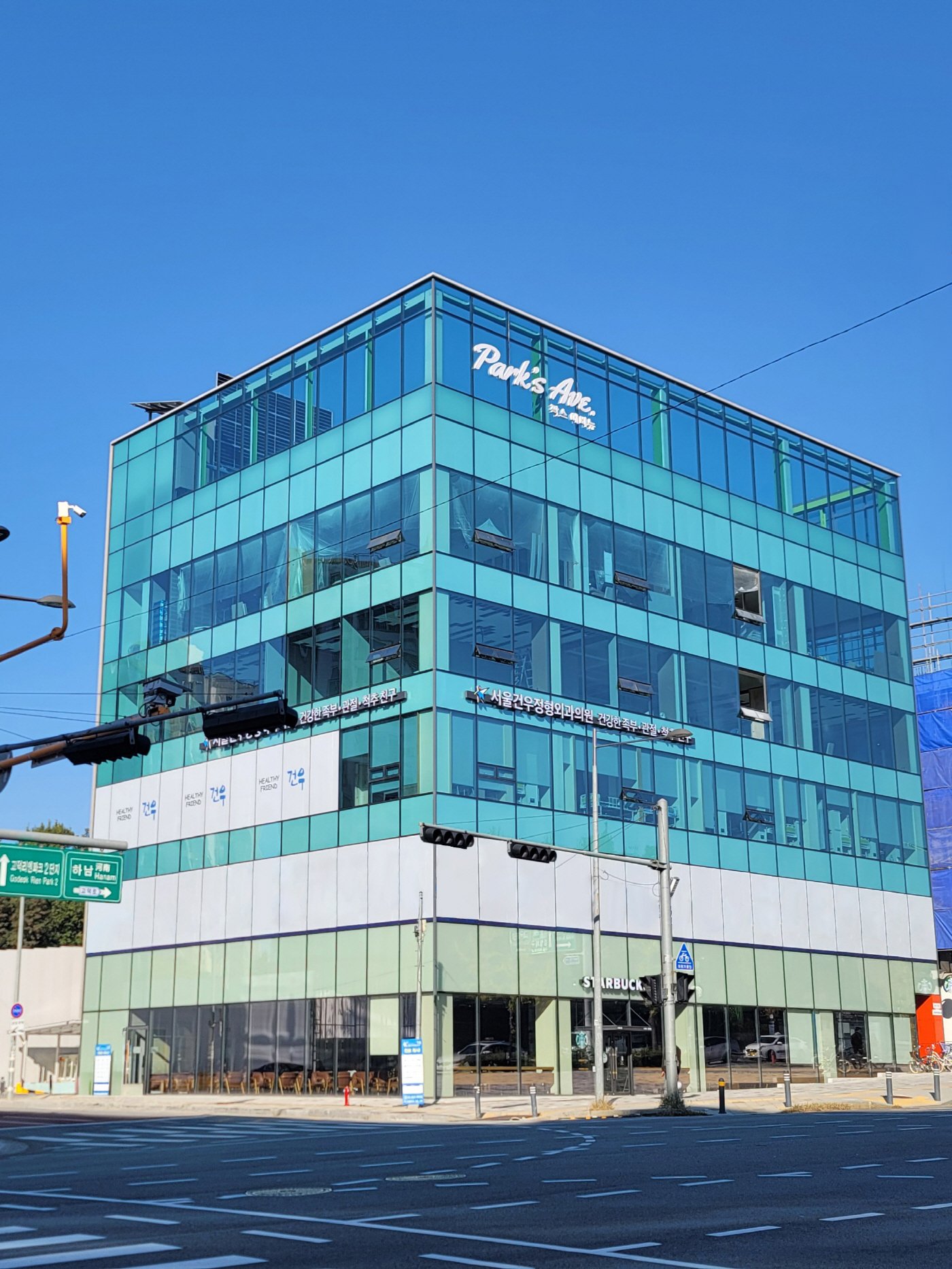
Seoul Gunwoo Orthopedic Surgery Clinic is an orthopaedic clinic in Gangdong-gu, Seoul, with a focus on foot and ankle care. Its listed areas include ankle ligament surgery, ankle fractures, ankle cartilage and arthritis, Achilles tendon repair, and bunion correction. This focus provides context when considering ankle-related care, but it does not replace a consultation. Ask how the clinic’s services relate to the condition being assessed and what options are relevant.
The clinic’s listed techniques include ligament reconstruction and Modified Broström ligament repair, as well as procedures for other foot and ankle concerns. Those additional services do not indicate that a patient needs more than one treatment; they describe the clinic’s stated scope of care. A patient seeking information about ankle instability can keep the discussion focused by asking about the diagnosis, the purpose of a proposed ligament procedure, and the care plan. The clinic profile also identifies Dr. Min Kyong Dae as an orthopaedic specialist and describes Dr. Choi Hong Joon’s background in foot and ankle medicine, clinical practice, and research. Patients can direct questions about the clinical team and treatment plan to the clinic.
Online reviews may use broad terms for ankle surgery, so compare them carefully with the procedure names used in a consultation. If an account does not clarify whether it describes reconstruction or repair, avoid assuming that it reflects the same treatment plan. Ask the medical staff to explain the terminology and its relevance to your case. Understanding the plan is more useful than drawing conclusions from a procedure label alone.
Ankle Ligament Reconstruction Reviews Seoul: Preparing for a Visit
Preparation can make a consultation more focused and help patients evaluate the information they receive. Write down the ankle concerns you want to discuss, any questions prompted by reviews, and the procedure terms you want clarified. Seoul Gunwoo Orthopedic Surgery Clinic provides orthopaedic care with a foot and ankle focus, including ankle ligament procedures. Use the visit to understand the assessment, the treatment being proposed, and the practical planning involved. Personal reviews may prompt questions, but the consultation should address your own circumstances.
Bring focused questions to the consultation
Before visiting, make a short list of questions about the ankle assessment and any procedure being considered. You might ask whether the discussion concerns reconstruction or Modified Broström ligament repair, what the proposed treatment is intended to address, and what follow-up should be discussed. Keep the list focused on your concerns so the conversation can address what matters to you. Clear questions are more useful than trying to interpret another patient’s experience as a treatment recommendation.
If online accounts have raised concerns, note the specific issue rather than relying on a general impression. For example, ask the medical staff to clarify unfamiliar procedure names or explain how a recommendation relates to the clinical findings. You can also ask what information the clinic needs to understand your condition. Do not assume that another patient’s symptoms, operation, or recovery are directly comparable to yours. The purpose of a consultation is to discuss your own ankle and establish whether a treatment option is relevant. Seoul Gunwoo Orthopedic Surgery Clinic offers foot and ankle-focused orthopaedic care, and the medical staff can address questions about the services included in that focus.
Arriving with specific questions helps turn online research into a useful clinical discussion. Keep the focus on your assessment, the procedure being considered, and the information you need to make an informed decision.
Discuss treatment planning and recovery questions
Patients often want to understand what treatment planning involves before making a decision. Ask the attending doctor what the proposed procedure is intended to address and what recovery-related guidance applies to your situation. Avoid assuming that a timeline described in a review will apply to you. Changes may take time depending on individual condition, and planning should be discussed in the context of your assessment.
Recovery questions are best addressed with the clinician who understands the proposed treatment and the patient’s condition. Ask what follow-up is recommended, what activity guidance may be relevant, and whom to contact with questions after the visit. The answers should reflect the specific procedure and individual assessment rather than a general timetable taken from a review. It is also reasonable to ask about the purpose of surgery, how the plan was selected, and what other options are being considered. These details help patients understand the decision without promising a particular result. Seoul Gunwoo Orthopedic Surgery Clinic lists ankle ligament reconstruction and Modified Broström ligament repair as techniques; the consultation can clarify whether either is relevant to an individual case.
Consider costs and practical details
Specific treatment costs depend on the procedure and individual care plan, so patients should discuss pricing directly with the clinic during consultation. Avoid relying on figures in unrelated online posts, since the procedure and circumstances may differ. You can also ask what practical steps are needed before treatment is planned. Clear cost and preparation questions help set expectations without assuming that every patient follows the same plan.
When speaking with the clinic, ask which treatment is being considered and what costs relate to that specific plan. If you are comparing experiences, check whether a review describes the same procedure and care context before using it as a point of reference. No online account can confirm the cost of an individual treatment plan. You may also want to ask how to arrange a consultation and what information to bring. Keeping these questions together makes it easier to receive relevant answers and distinguish practical details from opinions about another person’s care.
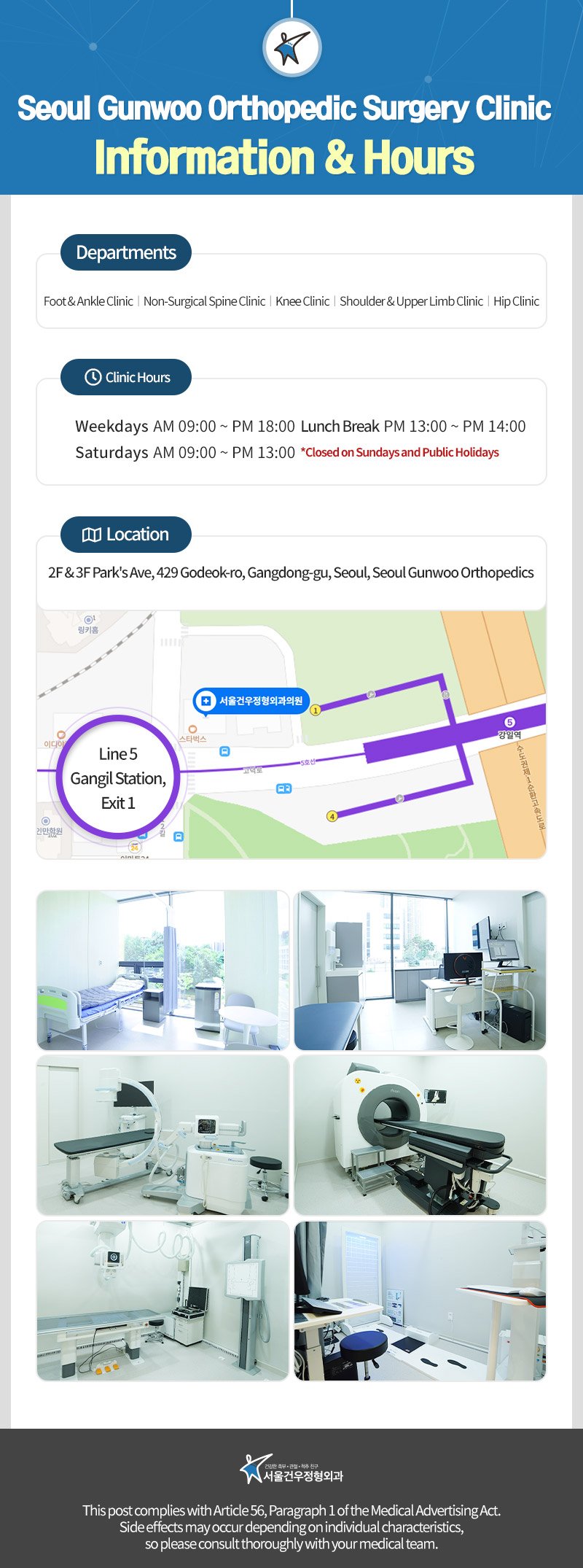
Seoul Gunwoo Orthopedic Surgery Clinic is located at 2F-3F, 429, Godeok-ro, Gangdong-gu, Seoul, Republic of Korea. Patients can call 02-426-9876 to ask about arranging a visit. Before attending, prepare a concise account of your ankle concerns and the questions you want answered. This helps keep the consultation centered on your own assessment and the treatment options being discussed.
Frequently Asked Questions
Q.What kind of place is Seoul Gunwoo Orthopedic Surgery Clinic?
A.Seoul Gunwoo Orthopedic Surgery Clinic is an orthopaedic clinic in Gangdong-gu, Seoul, with a focus on foot and ankle care. Its listed services include ankle ligament surgery and other foot and ankle procedures.
Q.Who might seek an ankle ligament consultation?
A.People seeking assessment for an ankle ligament concern can discuss their symptoms and treatment questions with the medical staff. Whether a procedure is appropriate depends on an individual evaluation.
Q.Which ankle ligament procedures does the clinic list?
A.The clinic lists ligament reconstruction and Modified Broström ligament repair among its techniques. The medical staff can explain which approach, if any, is relevant to a patient’s condition.
Q.How should I ask about treatment costs?
A.Ask the clinic about costs for the specific treatment being considered during consultation. The treatment plan and individual circumstances should guide that discussion.
Q.Where is Seoul Gunwoo Orthopedic Surgery Clinic, and how can I call?
A.The clinic is at 2F-3F, 429, Godeok-ro, Gangdong-gu, Seoul, Republic of Korea. Call 02-426-9876 to ask about arranging a visit.
Clinic Information
| Clinic | Seoul Gunwoo Orthopedic Surgery Clinic |
|---|---|
| Specialty | Orthopedics |
| Address | 2F-3F, 429, Godeok-ro, Gangdong-gu, Seoul, Republic of Korea |
| Phone | 02-426-9876 |
| Website | https://seoulfoot.sillajewelry.com |
| Specialist | Specialist care |
 Seoul Gunwoo Orthopedic Surgery Clinic