
Achilles tendon surgery patient reviews Seoul: What experiences can tell you
People searching for Achilles tendon surgery often want to know what treatment and recovery feel like in everyday life. Patient experiences can provide useful context, especially when a review describes the consultation, the information received, or the practical demands of recovery. A review is a starting point for questions, not a substitute for an assessment. At Seoul Gunwoo Orthopedic Surgery Clinic, the appropriate approach depends on the injury and the attending doctor’s evaluation. Reviews should be read alongside a discussion of your symptoms, examination findings, and treatment goals.
Read beyond the overall rating
A useful review explains what happened rather than relying solely on a rating or a brief recommendation. Look for details about whether the patient understood the proposed treatment, had an opportunity to ask questions, and received clear instructions afterward. These observations can help you think about the type of communication you value. Keep the limits of a personal account in mind: the writer’s injury, health history, and treatment plan may differ substantially from yours. A positive or negative account does not predict your own result.
It also helps to separate observations about the visit from statements about medical outcomes. A patient can describe how clearly a procedure was explained or whether scheduling was straightforward. A personal account, however, cannot determine that a particular technique is appropriate for every Achilles injury. When reading about recovery, consider whether the writer explains the context: the nature of the injury, the treatment received, and the stage of recovery at the time of writing. Even with those details, the account remains one person’s experience. Use any questions raised by a review to guide your consultation, rather than treating the review as a treatment recommendation. For example, if a reviewer mentions difficulty returning to exercise, ask the medical staff how activity decisions are made for your condition and what milestones would be relevant to you.
Patient accounts are most useful when they prompt specific questions about care and recovery. The decision about surgery still needs to rest on your own clinical assessment.
Recognize differences between injuries
The Achilles tendon connects the calf muscles to the heel and helps with movements such as walking and rising onto the toes. An Achilles tendon problem can involve different symptoms and circumstances, so accounts that use the same general label may describe different situations. Tell the attending doctor when your symptoms began, how the injury happened, and what activities are difficult. Do not assume that a treatment described in a review applies to your injury. A diagnosis and a discussion of options come first.
When comparing experiences, pay attention to the treatment being discussed. A review about surgery addresses a different decision from an account of rehabilitation without surgery. Likewise, someone describing an early appointment may not yet know how recovery will progress. These distinctions matter because a brief online account rarely captures the full reasoning behind a treatment plan. You can make your consultation more productive by describing the activities you hope to resume and asking how the injury affects those goals. If a review mentions a particular procedure, ask whether it is relevant to your diagnosis and why. The medical staff can explain the proposed approach in the context of your examination, rather than relying on similarities between your story and someone else’s.
Turn reviews into practical questions
Reviews often highlight concerns that are easy to overlook before an appointment. You might want to ask who will explain the proposed treatment, how follow-up is arranged, or what support you may need at home. Write down the questions that matter most to you and bring them to your visit. If an account uses an unfamiliar medical term, ask the attending doctor to explain it in plain English. A clear explanation can help you participate in the decision without assuming that another patient’s experience will be repeated.
It is also reasonable to ask what the next step would be if the initial assessment leaves uncertainty. Depending on your circumstances, the discussion may include further evaluation, treatment choices, or instructions for protecting the injured area. Ask how to contact our clinic if symptoms change before a planned visit. If you experience a sudden injury, significant difficulty walking, or a marked loss of strength, seek prompt medical assessment rather than relying on reviews to judge the problem.
Before making a decision, compare the answers you receive with your own priorities. Some people are most concerned about returning to work, while others want to understand walking, exercise, or help needed during recovery. All are appropriate topics for a consultation. The aim is not to find a review that matches your situation exactly, but to understand how an individualized plan would address your needs.
Achilles tendon surgery patient reviews Seoul: Understanding treatment choices
Whether an Achilles tendon injury needs surgery depends on the individual case. A consultation can clarify the diagnosis, discuss available approaches, and explain the reasons for a recommendation. Seoul Gunwoo Orthopedic Surgery Clinic lists ultrasound-guided Achilles repair among its techniques. The name of a technique alone does not establish that it is suitable for a particular patient. Ask the attending doctor what the proposed treatment involves, what alternatives are relevant, and how the decision relates to your injury and daily activities.
Discuss the assessment first
A treatment conversation begins with the details of the injury. Be ready to describe where you feel discomfort, whether symptoms began suddenly or developed over time, and how walking or other activities are affected. Mention previous injuries and any treatment you have already tried. The attending doctor can use this history and the clinical examination to explain the next steps. If additional testing is recommended, ask what information it is intended to provide and how it could influence the treatment discussion.
It is helpful to distinguish a diagnosis from a procedure. A diagnosis describes the problem being assessed; a procedure is one possible way to address a specific problem. Ask the medical staff to explain both in terms you understand. You can also ask whether a nonsurgical approach is appropriate in your circumstances and what it would involve. The answer depends on the findings and your individual needs, not on a general preference for or against surgery. If you have concerns about work, caregiving, exercise, or travel, raise them during the same conversation. These details can help the attending doctor explain how a proposed plan may fit into your life. Before leaving, make sure you understand the immediate next step and whom to contact if you need clarification.
A meaningful treatment discussion starts with the diagnosis, not with the name of an operation. Ask how each relevant option fits your injury, activities, and circumstances.
Ask about the proposed repair
Seoul Gunwoo Orthopedic Surgery Clinic lists ultrasound-guided Achilles repair as a technique. Ultrasound uses sound waves to create images of structures inside the body; its role in a proposed procedure should be explained by the attending doctor. If this approach is discussed for you, ask what it involves and why it is being considered. A technique listed by our clinic is not a promise that it will be recommended for every patient. The appropriate plan follows an individual assessment.
Useful questions include what the procedure is intended to address, how the tendon will be protected afterward, and what follow-up is expected. You can also ask which activities may need to be modified and how rehabilitation decisions will be made. If you have read about other operations, check whether they concern the Achilles tendon or a different foot and ankle condition. For example, our clinic also lists ligament repair and bunion surgery, but those procedures address different problems and should not be assumed to be alternatives for an Achilles injury. Ask for an explanation of the benefits and considerations of any option relevant to you, including the possibility that changes in function may take time depending on your condition.
Points to consider before treatment
Before agreeing to a procedure, ask about the considerations associated with your proposed treatment and your health history. Surgery generally involves risks, which can include infection, wound problems, and complications related to anesthesia. The attending doctor can explain which considerations are relevant to you and what steps are planned to address them. Discuss medications, allergies, existing health conditions, and any previous difficulty with surgery or anesthesia. This conversation helps you make an informed decision rather than relying on another patient’s account.
Recovery is another part of the decision. Ask whether you will need help at home, how mobility will be managed, and when your progress will be reassessed. Avoid assuming that a recovery timeline from a review will apply to you. The course of recovery depends on the injury, treatment, and individual circumstances. Ask for instructions tailored to your plan, including what changes in symptoms should prompt you to contact the medical staff.
Cost is also appropriate to discuss before treatment. Ask what is included in the proposed plan and whether follow-up care, rehabilitation, or other services are billed separately. Costs depend on the care required, so request an estimate that reflects your circumstances. If you are comparing options, make sure you understand both the medical recommendation and the practical commitments involved.
Achilles tendon surgery patient reviews Seoul: Preparing for your visit
A focused appointment can help you move from general online research to information relevant to your condition. Bring a concise history of the injury, a list of current medications, and any prior test results or treatment records you have available. Note the questions that remain after reading patient experiences, particularly those about diagnosis, treatment, and recovery. Seoul Gunwoo Orthopedic Surgery Clinic provides orthopedic care, and its medical staff can discuss the next steps after assessing your circumstances.
Prepare a clear injury history
Start with when and how the problem began. Describe any change in pain, swelling, strength, or walking, and explain whether symptoms affect work, exercise, or routine activities. If you have already received care, bring the relevant records you have and note what treatment was recommended. You do not need to decide in advance which details are medically important. Sharing a clear account gives the attending doctor a useful starting point for questions and examination.
Write down your priorities as well as your symptoms. For instance, you may want to know how to manage stairs, when you can travel, or how a treatment plan could affect your work. Rather than asking for a fixed answer drawn from another patient’s experience, ask what factors will determine your own progress. If a family member or companion will help during recovery, consider discussing what support might be needed. Bring a list of medications and allergies, and mention any health concerns that could affect the treatment conversation. A prepared history supports a more useful discussion, but it does not replace an examination. If you leave with a plan, repeat the key points back to the medical staff so you can check that you have understood them.
Good preparation helps the medical staff understand both the injury and the activities that matter to you. Bring your questions, but leave room for the assessment to guide the conversation.
Plan communication and scheduling
If you need an English-speaking clinician or an interpreter, contact our clinic before booking to confirm what language support is available. An English-language website does not by itself establish that interpretation or an English-speaking clinician will be available at your appointment. Consider writing down medical terms and questions in advance, particularly if you plan to bring a companion to help with communication. Ask how instructions and follow-up information will be explained so you can prepare for the visit.
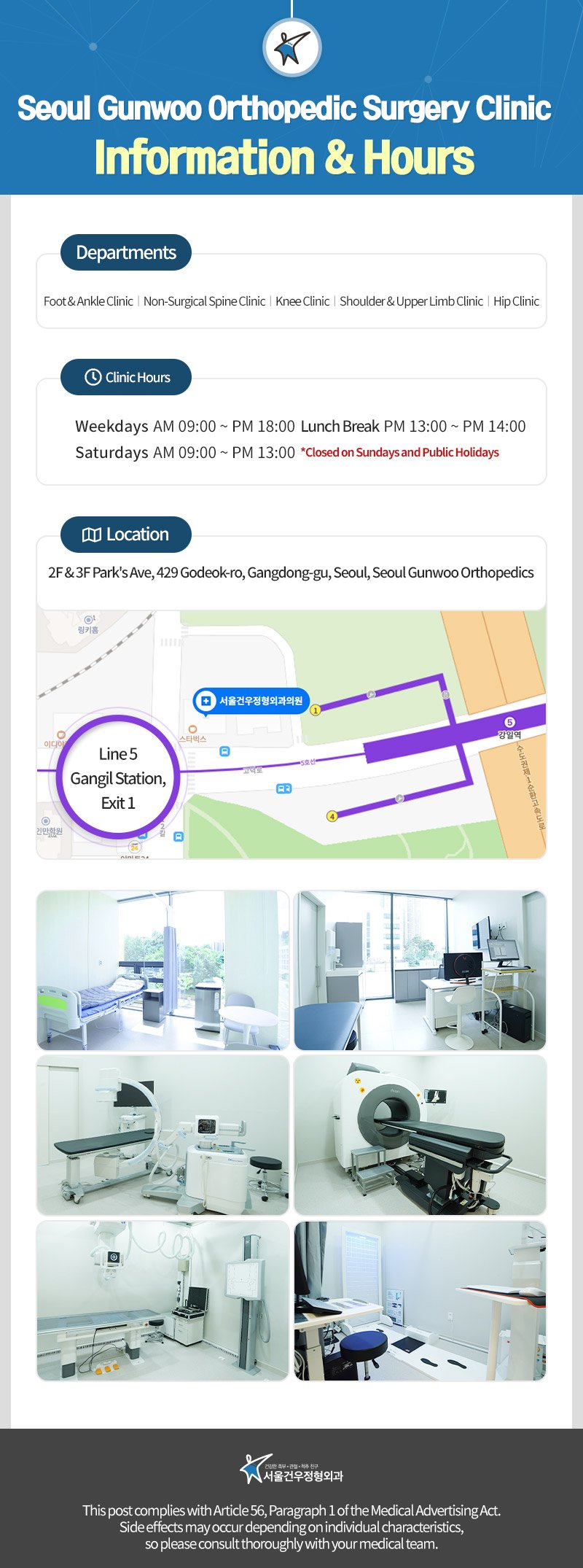
Our clinic holds consultations on weekdays and Saturdays, with a weekday lunch break. Sunday and public holidays are closed. When arranging a visit, consider whether you need extra time for travel or mobility assistance. You can also ask what records to bring and how to arrange follow-up if treatment is recommended. The clinic’s listed hours are shown below in Korea Standard Time. If your symptoms are urgent, do not wait for a routine appointment without seeking appropriate medical advice. For a planned visit, checking the practical details ahead of time can leave more room during the consultation to discuss your diagnosis and treatment options.
| Day | Consultation hours |
|---|---|
| Monday–Friday | 9:00 a.m.–6:00 p.m.; lunch break 1:00–2:00 p.m. |
| Saturday | 9:00 a.m.–1:00 p.m. |
| Sunday and public holidays | Closed |
Understand the medical background
Dr. Choi Hong Joon has a background in foot and ankle medicine, clinical practice, and research. Dr. Min Kyong Dae’s profile lists orthopedic, arthroscopy, and sports-medicine training. These backgrounds provide context for the orthopedic care available at Seoul Gunwoo Orthopedic Surgery Clinic. For your own visit, ask who will assess you and how the proposed treatment relates to your diagnosis. The most useful discussion connects the medical plan with the questions and activities that matter to you.
After the consultation, review the proposed next steps before making a decision. If anything is unclear, ask for an explanation of the diagnosis, the reason for the recommendation, and the expected follow-up. You may also want to clarify how activity restrictions and rehabilitation will be addressed. Personal experiences can help you identify these questions, but the answers should come from a conversation about your own condition.
Finally, keep a written record of the instructions you receive and the questions you still want answered. A treatment decision should be based on a clear understanding of the available options, their considerations, and your practical needs. Reviews can inform the conversation; an individual assessment guides the plan.

Frequently Asked Questions
Q.What kind of care does Seoul Gunwoo Orthopedic Surgery Clinic offer?
A.Seoul Gunwoo Orthopedic Surgery Clinic provides orthopedic care and lists ultrasound-guided Achilles repair among its techniques.
Q.Who might consider an appointment for an Achilles tendon problem?
A.An appointment may be useful for someone with Achilles-area symptoms or an injury that affects walking or other activities. The attending doctor can assess the problem and discuss appropriate next steps.
Q.Does Seoul Gunwoo Orthopedic Surgery Clinic offer a technique for Achilles repair?
A.Our clinic lists ultrasound-guided Achilles repair as a technique. Whether it is appropriate depends on the individual assessment.
Q.What should I bring to an appointment?
A.Bring a list of medications and allergies, any relevant records you have, and notes about your symptoms and questions.
Q.Where is Seoul Gunwoo Orthopedic Surgery Clinic, and how can I contact our clinic?
A.Our clinic is at 2F–3F, 429 Godeok-ro, Gangdong-gu, Seoul, Republic of Korea. Call 02-426-9876 before booking if you need to check language support or interpretation.
Clinic Information
| Clinic | Seoul Gunwoo Orthopedic Surgery Clinic |
|---|---|
| Specialty | Orthopedics |
| Address | 2F-3F, 429, Godeok-ro, Gangdong-gu, Seoul, Republic of Korea |
| Phone | 02-426-9876 |
| Website | https://seoulfoot.sillajewelry.com |
| Specialist | Specialist care |
 Seoul Gunwoo Orthopedic Surgery Clinic